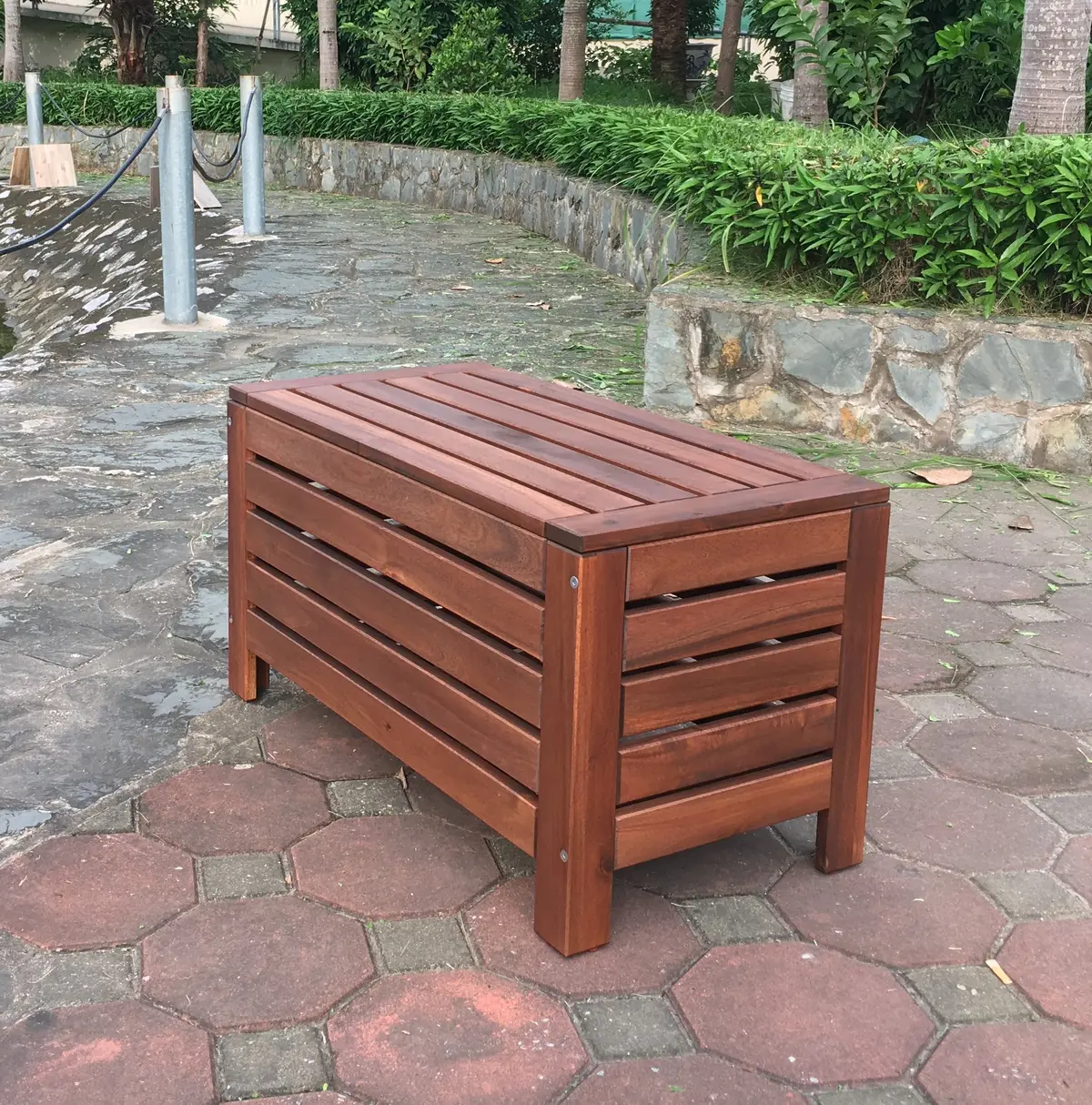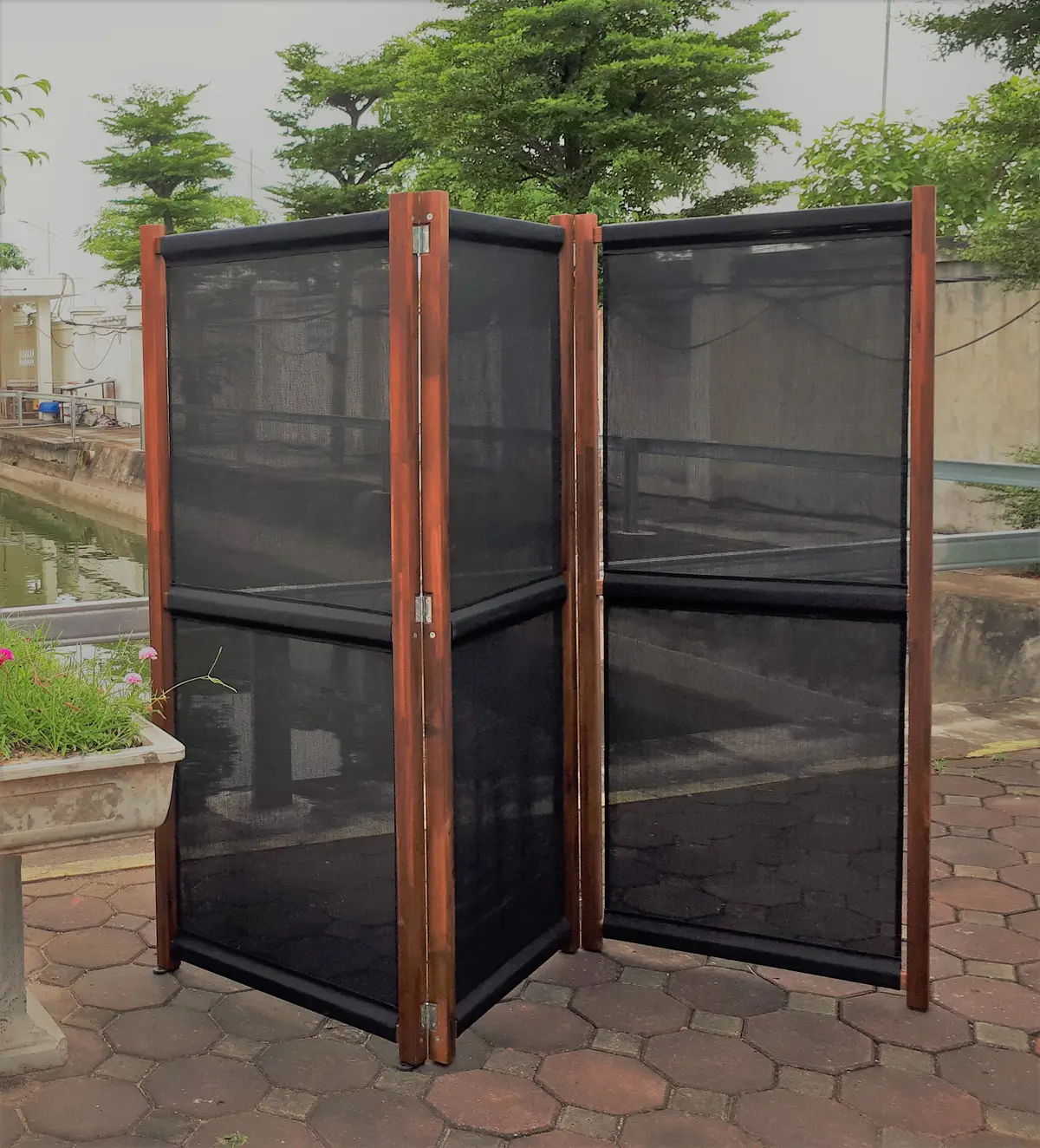
The US Market Needs for Acacia Outdoor Furniture
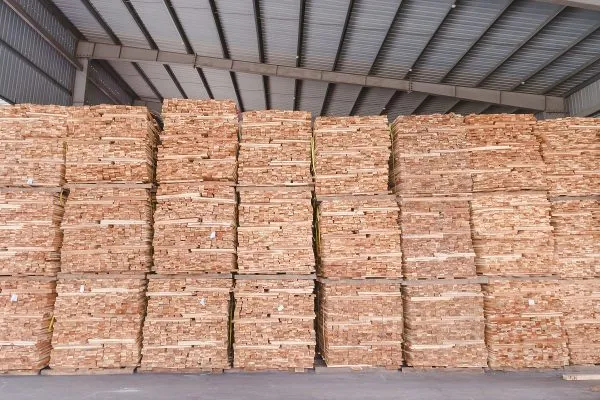
The demand for outdoor furniture in North America continues to accelerate at an impressive rate. As more Americans invest in their outdoor living spaces, the retailers who serve them are constantly seeking reliable, high-volume supply chains for quality solid-wood products.
Acacia wood outdoor furniture represents a strategic sweet spot for importers: it offers premium aesthetics at a price point that allows for healthy margins, while meeting the increasingly strict sustainability requirements of today’s consumers and regulators.
In this guide, we present a complete roadmap for US importers seeking to source FSC-certified Acacia outdoor furniture from Vietnam.
Why Vietnam is the Global Sourcing Hub for Acacia Outdoor Furniture
The Plantation Advantage
Unlike countries that rely on logging natural forests, Vietnam has built an entire industry around plantation Acacia. Over 1.2 million hectares are dedicated to Acacia plantations across the country, making it one of the largest and most sustainable sources of this timber in the world.
Manufacturing Maturity
The Vietnamese furniture manufacturing industry is not new. It has evolved over 30+ years from basic joinery into world-class manufacturing:
- High automation rates: Factories use CNC routers and robotic sanding lines.
- Skilled workforce: Generations of accumulated woodworking expertise.
- Global quality standards: Many factories, including NAFOCO, manufacture directly for IKEA, the world’s most demanding furniture retailer.
The NAFOCO Advantage: Factory Tour
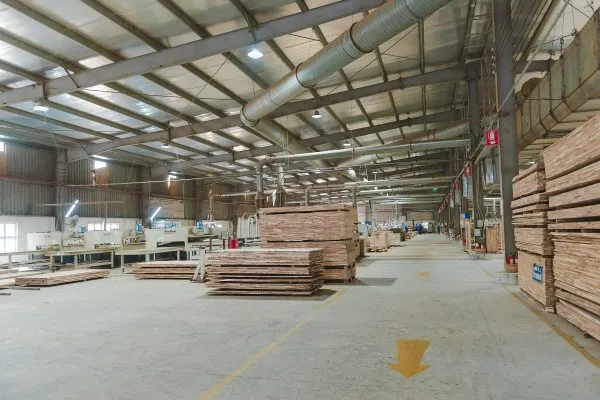
When you partner with NAFOCO, you get transparency into the entire manufacturing process:
Step 1: Forest Management Our FSC-certified plantations (1,200+ hectares) are managed under strict environmental standards. Trees are selectively harvested on a 7–12 year rotation.
Step 2: Sawmill and Kiln Drying Raw logs are processed in our local sawmill. The timber is then kiln-dried to a precise 8–12% moisture content to ensure stability during international shipping.
Step 3: CNC Machining and Assembly Our automated production lines transform dried lumber into precision components. Tolerances are maintained at ±0.5mm, ensuring perfect assembly for RTA furniture.
Step 4: Finishing and Packaging Furniture is sanded, finished with weather-resistant coatings, and packed using retail-ready packaging designed for maximum container utilization.
FSC Certification: The Non-Negotiable Standard
For US importers, the FSC Certification is no longer a “nice-to-have” — it’s a requirement.
What FSC Means for Your Business:
- Legal compliance: Protects against Lacey Act penalties.
- Retailer access: Major US retailers require FSC for their supply chains.
- Consumer trust: 70%+ of US consumers prefer sustainable products.
How to Verify FSC:
Always request the manufacturer’s FSC CoC (Chain of Custody) certificate number and verify it on the FSC public database at info.fsc.org.
Logistics and Shipping Timelines
| Destination Port | Transit Time from Vietnam | Typical Incoterm |
|---|---|---|
| Long Beach / Los Angeles | 22–26 days | FOB or CIF |
| New York / Savannah | 28–32 days | FOB or CIF |
| Vancouver | 22–26 days | CIF |
| Rotterdam | 25–30 days | CIF |
NAFOCO ships over 2,000 TEU containers annually and has established relationships with all major carriers (Maersk, MSC, COSCO, ONE).
Quality Control Checklist for Importers
Before confirming an order, confirm these 7 checkpoints:
- FSC CoC Certificate — Valid and covers the product range.
- Moisture Content Report — Must be 8–12%.
- Packing List — Confirm RTA or fully assembled.
- Container Loading Plan — Maximize cube utilization.
- Surface Finish Specification — UV-resistant sealer applied.
- Hardware Packing — All necessary bolts, screws, and Allen keys included.
- Packaging Standards — Export-grade cardboard with corner protectors.
The Sourcing Due Diligence Framework
For US importers, supplier vetting is the difference between a successful long-term partnership and a costly mistake. Here is the five-step due diligence framework we recommend:
Step 1: Verify FSC Chain of Custody
Request the manufacturer’s FSC Certificate Number and verify it at info.fsc.org. Ensure the certificate covers the product type (e.g., “Manufacturing and trading of solid wood furniture”). Check the certificate expiry date.
Step 2: Request Factory Audit Reports
Ask for their most recent BSCI or SEDEX audit report. These social compliance audits cover labor conditions, wages, working hours, and environmental practices.
Step 3: Conduct a Video Factory Tour
Modern factory tours can be conducted virtually. Ask to see the sawmill, kiln drying chambers, CNC machining area, and the finishing line. Observe the number of workers, safety equipment, and organization of the production floor.
Step 4: Analyze the Counter Sample
Order a single counter sample before committing to a full container. Inspect the following with a critical eye:
- Moisture Content: Use a digital moisture meter. It should read 8-12%.
- Finish Quality: Run your hand over all surfaces—there should be no rough spots, drips, or bubbles.
- Joinery: Check that all joints are tight. Shake the frame firmly—there should be zero movement.
- Hardware: Check all screws are stainless steel (a magnet should not stick to them).
Step 5: Small Test Order Before Volume Commitment
We recommend placing a test order of 1 container before committing to a full season program. This allows you to validate production quality, shipping timelines, and communication responsiveness.
Import Compliance: A Checklist for US Buyers
Importing furniture from Vietnam involves several compliance checkpoints:
Lacey Act Declaration
All wood products imported into the US require a Lacey Act Declaration (PPQ 505 form). This declares the species, country of harvest, and quantity of all wood components. NAFOCO provides a detailed Lacey Act Material Disclosure document with every shipment.
Section 301 Tariff Avoidance
Vietnamese-origin furniture is not subject to Section 301 tariffs (which can be 25%+ for Chinese-origin goods). However, Customs and Border Protection (CBP) may scrutinize shipments to ensure the wood is genuinely Vietnamese and not “transshipped” Chinese material. NAFOCO’s vertically integrated supply chain provides an unimpeachable paper trail.
EUDR Compliance (for EU Buyers)
The EU Deforestation Regulation (EUDR) requires companies to prove that products are not linked to recent deforestation. FSC certification combined with NAFOCO’s geolocation harvest data satisfies this requirement.
Building a Long-Term Sourcing Partnership
The most successful B2B sourcing relationships are not transactional—they are strategic. Here is how to build a long-term partnership that benefits both parties:
Year 1: Establish Trust
- Place a small initial order.
- Visit the factory in person if possible.
- Provide clear, detailed specifications.
Year 2: Grow Volume
- Expand the product range.
- Negotiate annual volume discounts.
- Collaborate on new product development.
Year 3+: Strategic Partnership
- Gain access to reserved production capacity during peak seasons.
- Receive preferential pricing on raw material fluctuations.
- Co-develop exclusive designs that competitors cannot replicate.
The Economics of Sourcing: Tariff Mitigation and the China Plus One Strategy
In 2026, sourcing is as much about trade policy as it is about product quality. The “China Plus One” strategy is no longer a luxury—it is a survival requirement for US importers.
Section 301 Tariffs and Antidumping Duties Chinese-origin wood furniture faces a primary tariff of 25% under Section 301, plus potential antidumping duties that can reach 200% for bedroom furniture and cabinets. Vietnamese-origin goods, conversely, benefit from the General Rate of Duty, which is often 0% for many furniture categories under specific trade programs.
The Financial Reality On a $20,000 container of outdoor furniture, the difference in duties alone can be $5,000 to $40,000. By partnering with NAFOCO, importers immediately recapture this margin, which can be used to improve retail competitiveness or invested in brand marketing.
ESG Compliance: More Than Just a Certificate
For modern retail boards, ESG (Environmental, Social, and Governance) reporting is a fiduciary duty. Sourcing from a vertically integrated manufacturer like NAFOCO simplifies this reporting significantly.
Traceability (The Lacey Act and EUDR) The US Lacey Act and the EU Deforestation Regulation (EUDR) require importers to prove the legal origin of their wood. NAFOCO’s 1,200 hectares of FSC-certified forest provide a clear, third-party audited chain of custody. We provide geolocation data for our harvests, allowing our clients to prove to regulators that their products are not linked to deforestation.
Social Responsibility Our BSCI and SEDEX audits provide transparency into our labor practices. We provide fair wages, health insurance, and safe working conditions for 1,800 employees in Ninh Binh. For your brand, this means zero risk of “social scandals” that can devastate a retail reputation overnight.
The Science of Timber Durability: Janka and Density Analysis
To appreciate why certain woods dominate the export market, we must look at the technical specifications that define their performance. The Janka Hardness test is the industry standard, measuring the force required to embed an 11.28mm steel ball into the wood.
| Wood Species | Janka Hardness (lbf) | Density (kg/m3) |
|---|---|---|
| Acacia (Vietnamese) | 1,100 - 1,750 | 650 - 850 |
| White Oak | 1,360 | 750 |
| Teak (Plantation) | 1,000 - 1,150 | 600 - 700 |
| Black Walnut | 1,010 | 640 |
For B2B buyers, these numbers translate directly to product longevity. A higher Janka rating means the furniture resists denting and surface wear from heavy daily use. In the hospitality sector (hotels and restaurants), where furniture is subjected to high turnover, the 1,500+ lbf rating of premium Vietnamese Acacia makes it a superior choice to traditional domestic hardwoods.
Kiln Drying: The Invisible Quality Factor
The greatest risk in international furniture shipping is “checking” (small surface cracks) caused by moisture imbalance. When furniture moves from the humid environment of Vietnam to the dry indoor air of the US Midwest or the arid climate of Arizona, the wood fibers shrink.
NAFOCO uses advanced vacuum kiln drying technology to achieve a consistent 8-12% moisture content (MC). This process takes 21-28 days and is monitored by AI-driven sensors. By achieving this precise MC range, we ensure the wood is “stressed-relieved,” meaning it will maintain its dimensions even after thousands of miles of ocean transit.
Logistics Excellence: Maximizing Container Utilization
Ocean freight is a significant part of the landed cost. NAFOCO’s engineering team uses 3D loading software to optimize every cubic centimeter of a 40HQ container.
- RTA (Ready-To-Assemble) Optimization: By designing components that flat-pack efficiently, we can often fit 20-30% more units per container than traditional “knock-down” designs.
- Packaging Integrity: We use 200lb-test double-walled corrugated cardboard with internal corner protectors. This ensures that even in a tightly packed container, the product arrives in pristine retail condition.
- Port Proximity: Our factories are located within 3 hours of Hai Phong port, reducing domestic drayage costs and ensuring we never miss a vessel cutoff.
Conclusion: Your Strategic Sourcing Partner
In a competitive retail environment, the quality of your supply chain is a direct competitive advantage. By partnering with a vertically integrated, FSC-certified manufacturer like NAFOCO, you gain a partner who is invested in your long-term success—not just the next order.
The Economics of Sourcing: Tariff Mitigation and the China Plus One Strategy
In 2026, sourcing is as much about trade policy as it is about product quality. The “China Plus One” strategy is no longer a luxury—it is a survival requirement for US importers.
Section 301 Tariffs and Antidumping Duties Chinese-origin wood furniture faces a primary tariff of 25% under Section 301, plus potential antidumping duties that can reach 200% for bedroom furniture and cabinets. Vietnamese-origin goods, conversely, benefit from the General Rate of Duty, which is often 0% for many furniture categories under specific trade programs.
The Financial Reality On a $20,000 container of outdoor furniture, the difference in duties alone can be $5,000 to $40,000. By partnering with NAFOCO, importers immediately recapture this margin, which can be used to improve retail competitiveness or invested in brand marketing.
ESG Compliance: More Than Just a Certificate
For modern retail boards, ESG (Environmental, Social, and Governance) reporting is a fiduciary duty. Sourcing from a vertically integrated manufacturer like NAFOCO simplifies this reporting significantly.
Traceability (The Lacey Act and EUDR) The US Lacey Act and the EU Deforestation Regulation (EUDR) require importers to prove the legal origin of their wood. NAFOCO’s 1,200 hectares of FSC-certified forest provide a clear, third-party audited chain of custody. We provide geolocation data for our harvests, allowing our clients to prove to regulators that their products are not linked to deforestation.
Social Responsibility Our BSCI and SEDEX audits provide transparency into our labor practices. We provide fair wages, health insurance, and safe working conditions for 1,800 employees in Ninh Binh. For your brand, this means zero risk of “social scandals” that can devastate a retail reputation overnight.
The Science of Timber Durability: Janka and Density Analysis
To appreciate why certain woods dominate the export market, we must look at the technical specifications that define their performance. The Janka Hardness test is the industry standard, measuring the force required to embed an 11.28mm steel ball into the wood.
| Wood Species | Janka Hardness (lbf) | Density (kg/m3) |
|---|---|---|
| Acacia (Vietnamese) | 1,100 - 1,750 | 650 - 850 |
| White Oak | 1,360 | 750 |
| Teak (Plantation) | 1,000 - 1,150 | 600 - 700 |
| Black Walnut | 1,010 | 640 |
For B2B buyers, these numbers translate directly to product longevity. A higher Janka rating means the furniture resists denting and surface wear from heavy daily use. In the hospitality sector (hotels and restaurants), where furniture is subjected to high turnover, the 1,500+ lbf rating of premium Vietnamese Acacia makes it a superior choice to traditional domestic hardwoods.
Kiln Drying: The Invisible Quality Factor
The greatest risk in international furniture shipping is “checking” (small surface cracks) caused by moisture imbalance. When furniture moves from the humid environment of Vietnam to the dry indoor air of the US Midwest or the arid climate of Arizona, the wood fibers shrink.
NAFOCO uses advanced vacuum kiln drying technology to achieve a consistent 8-12% moisture content (MC). This process takes 21-28 days and is monitored by AI-driven sensors. By achieving this precise MC range, we ensure the wood is “stressed-relieved,” meaning it will maintain its dimensions even after thousands of miles of ocean transit.
Logistics Excellence: Maximizing Container Utilization
Ocean freight is a significant part of the landed cost. NAFOCO’s engineering team uses 3D loading software to optimize every cubic centimeter of a 40HQ container.
- RTA (Ready-To-Assemble) Optimization: By designing components that flat-pack efficiently, we can often fit 20-30% more units per container than traditional “knock-down” designs.
- Packaging Integrity: We use 200lb-test double-walled corrugated cardboard with internal corner protectors. This ensures that even in a tightly packed container, the product arrives in pristine retail condition.
- Port Proximity: Our factories are located within 3 hours of Hai Phong port, reducing domestic drayage costs and ensuring we never miss a vessel cutoff.
Conclusion: Your Sourcing Partner in Vietnam
Sourcing Acacia wood outdoor furniture from Vietnam is one of the smartest strategic moves for US importers in 2026. The combination of cost-effectiveness, sustainability, and manufacturing sophistication is unmatched in the global furniture industry.
NAFOCO has been perfecting this craft for over three decades. Whether you are a major retail chain or an independent importer, we have the capacity and experience to support your growth.
Ready to Start?
Ready to De-Risk Your Supply Chain?
NAFOCO has been a trusted manufacturing partner for global furniture brands since 1991. Let us show you how easy the transition can be.