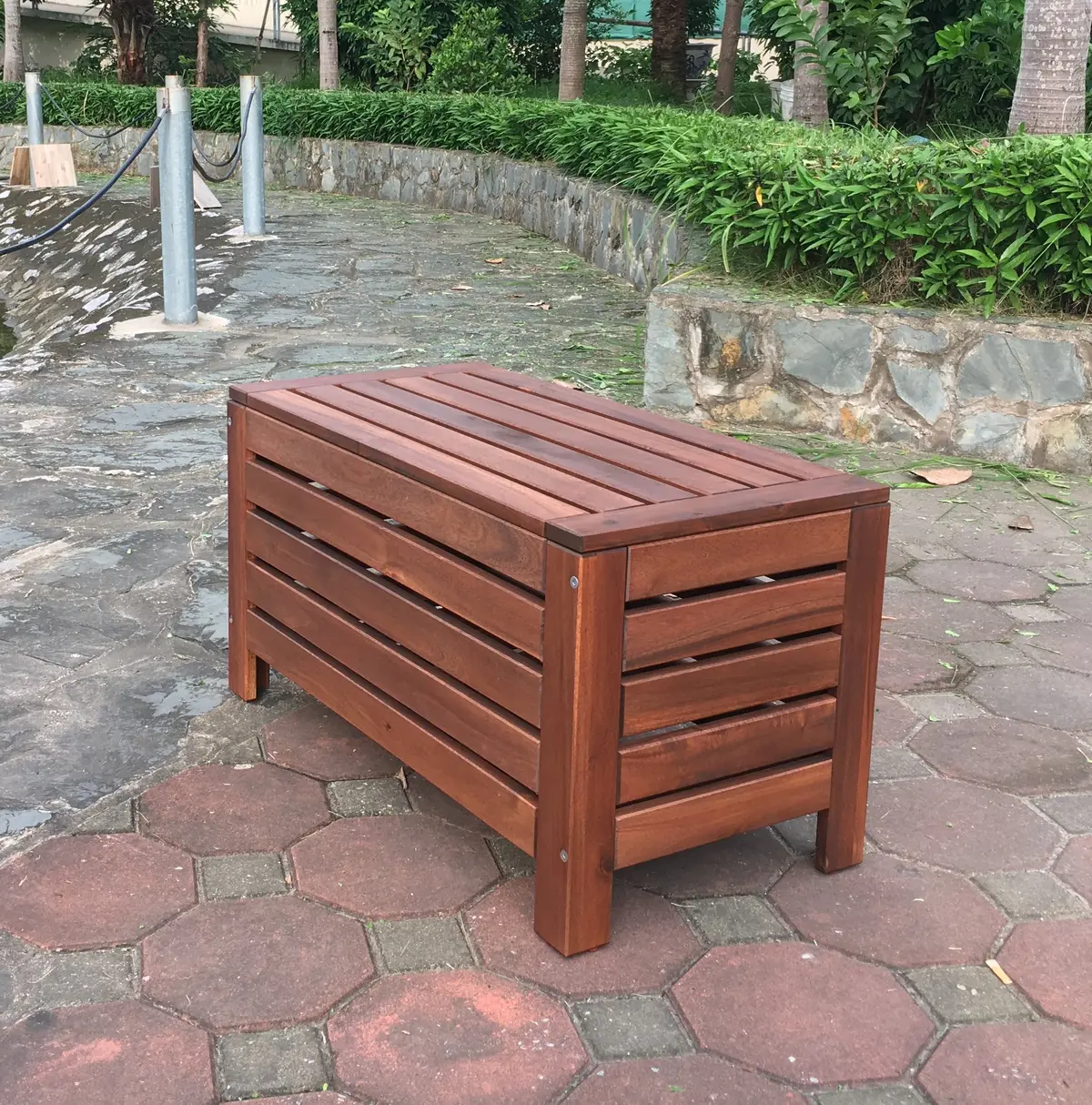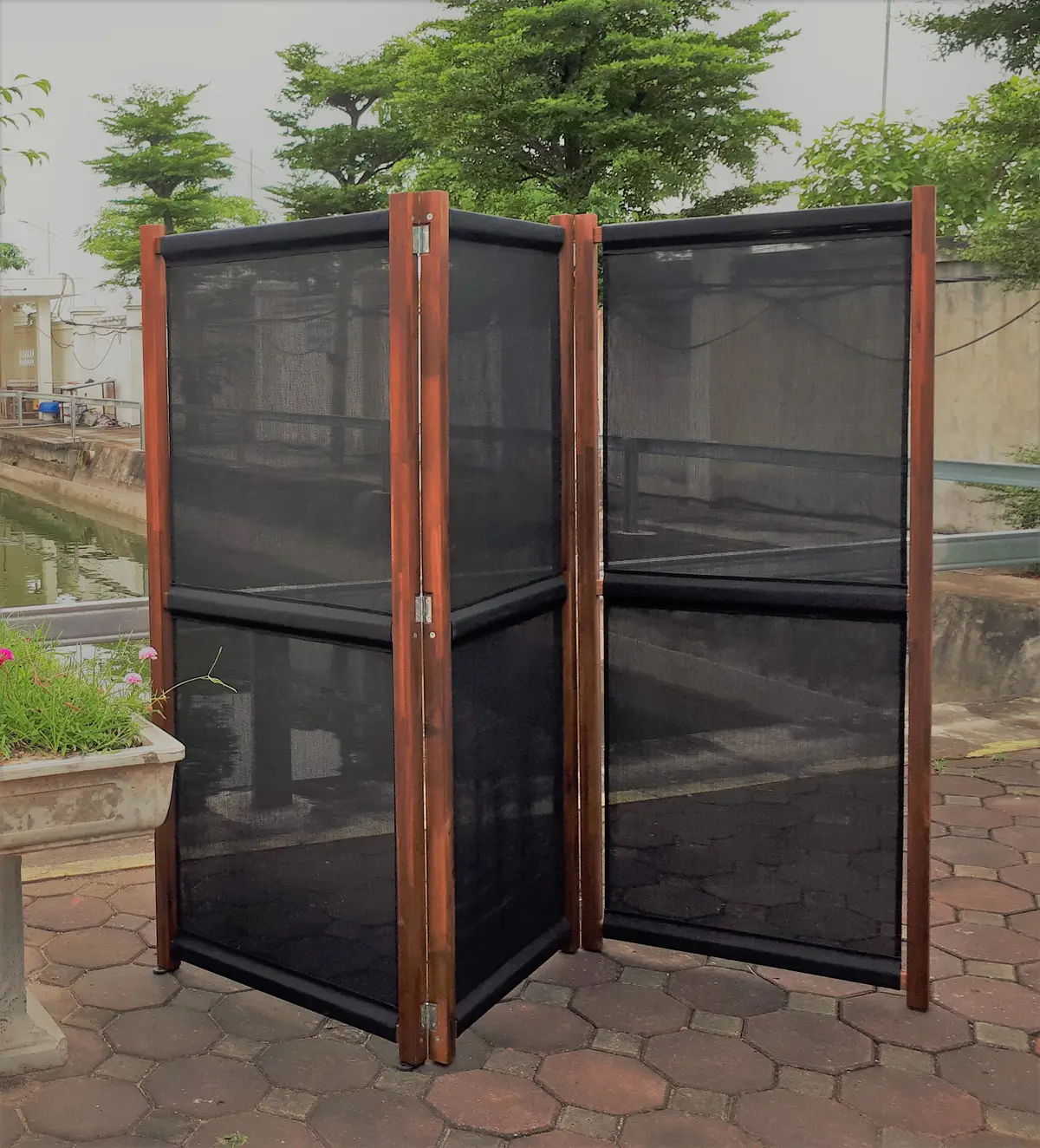
The Big Question: Does Acacia Wood Last Outdoors?
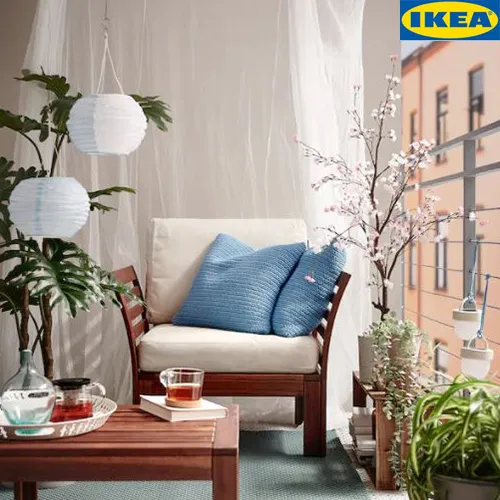
If you are a US furniture importer or a homeowner looking for the perfect patio set, you’ve likely encountered Acacia wood. It is widely marketed as a premier choice for outdoor living, but how does it actually perform when exposed to rain, snow, and the relentless summer sun?
At NAFOCO, we’ve manufactured millions of outdoor furniture components using Acacia mangium and hybrid species. In this guide, we’ll dive into the technical reasons why Acacia is ideally suited for the outdoors, its potential drawbacks, and how to maximize its lifespan.
Why Acacia is an Outdoor Champion
1. High Natural Oil Content
Unlike many softwoods that require chemical pressure-treating to survive outdoors, Acacia is naturally rich in organic oils. These oils act as a biological barrier, repelling water and preventing the wood from absorbing the moisture that leads to rot and structural failure.
2. High Density and Hardness
With a Janka hardness rating often exceeding 1,100 lbf, Acacia is dense enough to resist the physical wear and tear of outdoor use. It doesn’t dent or scratch easily, and its tight grain structure makes it difficult for wood-boring insects—such as termites—to penetrate.
3. Dimensional Stability
While all wood “breathes” (expands and contracts with humidity), Acacia is remarkably stable. When properly kiln-dried and finished, it is less prone to warping or significant cracking than other common outdoor timbers like Eucalyptus or Pine.
Pros and Cons of Acacia Outdoor Furniture
The Pros:
- Affordability: Acacia provides a “Teak-like” performance at a significantly lower price point, making it ideal for high-volume retail programs.
- Sustainability: It grows rapidly and is widely available as FSC-certified timber in Vietnam.
- Aesthetics: Its varied grain patterns and warm tones look sophisticated in any outdoor setting.
- Eco-Friendly: It doesn’t require the harsh chemical treatments often found in “treated” lumber.
The Cons:
- Maintenance: Like all natural wood, it will gray over time if left untreated.
- Temperature Sensitivity: In extremely dry, desert-like climates, small “checking” (surface cracks) can occur if the wood is not occasionally oiled.
- Weight: Its density makes it heavier than aluminum or plastic furniture, which may affect shipping costs.
Expert Maintenance Tips: Making Your Acacia Last for Decades
To ensure that your outdoor acacia furniture retains its structural integrity and aesthetic beauty, follow these three simple rules:
- Annual Oiling: Apply a high-quality teak oil or specialized hardwood oil once a year. This replenishes the natural oils and keeps the wood flexible, preventing surface cracks.
- Clean Properly: Use a soft brush and mild soapy water to remove dirt and pollen. Avoid power-washing, which can strip the natural oils and damage the wood fibers.
- Winter Protection: While Acacia is weather-resistant, covering it or storing it indoors during extreme winter months will significantly extend its lifespan.
How Acacia Compares in Real-World Outdoor Tests
Lab specs are one thing; real-world performance is another. Based on 35+ years of manufacturing outdoor furniture for markets from Florida to Norway, here is what NAFOCO has learned:
Humidity Test: Florida Summer
Florida’s Gulf Coast is one of the harshest environments for outdoor furniture. With 80%+ relative humidity for months at a time, furniture must be impeccably dried and finished. NAFOCO’s kiln-dried Acacia (8-12% MC) has shown less than 3mm dimensional movement after two full summers in these conditions—well within acceptable tolerances.
UV Test: Arizona Desert
UV exposure is the primary cause of color fading and surface checking. In our tests, properly finished Acacia retained 85% of its original color vibrancy after 12 months of direct Arizona sun—outperforming many composite materials.
Cold Weather Test: Canadian Winters
Perhaps counterintuitively, Acacia performs well in freeze-thaw cycles due to its high density. Wood that is covered during deep winter retains structural integrity for decades.
Care Calendar: Month-by-Month Guide
For B2B buyers who want to provide care cards with their products, here is a simple annual maintenance schedule:
Spring (April–May)
- Clean with mild soap and warm water.
- Sand lightly with 220-grit sandpaper if surface is rough or gray.
- Apply one coat of teak oil or hardwood penetrating oil.
Summer (June–August)
- Wipe down after heavy rain.
- Apply a second coat of oil if the wood appears dry or lighter in color.
Autumn (September–October)
- Deep clean before winter.
- Apply final coat of oil before temperatures drop.
Winter (November–March)
- Cover with a breathable furniture cover.
- Store cushions indoors.
- If possible, move furniture to a covered porch or garage.
Understanding Acacia Grain Patterns
One of the most compelling selling points of Acacia is its visual diversity. Unlike plantation Pine or Rubberwood, which have very uniform grain patterns, each piece of Acacia is unique.
The grain patterns range from:
- Straight grain: Clean, contemporary look ideal for modern design.
- Wavy grain: Organic, flowing patterns that add character.
- Interlocked grain: Creates a shimmering, ribbon-like effect under light.
This natural variation allows furniture brands to offer a “handcrafted” aesthetic that consumers are increasingly willing to pay a premium for.
The Finishing Spectrum: From Raw to Premium
Level 1: Unfinished/Natural
Sold as-is after sanding. The consumer applies their own oil. Lowest cost, but highest return risk if care instructions are not clear.
Level 2: Single-Coat Oil Finish
Factory-applied penetrating oil. This is the most common specification for mid-range outdoor furniture collections.
Level 3: Multi-Coat UV-Resistant Lacquer
Four coats of a UV-resistant, water-based lacquer. Highest durability, best color retention. Adds 5-8% to production cost but dramatically reduces warranty returns.
Level 4: FSC-Certified Tung Oil
A premium, environmentally certified finish derived from the Tung tree. Popular with European buyers who require “natural finish” certifications.
Addressing Common Consumer Complaints
As a B2B buyer, you need to know the common complaints about Acacia furniture and how to pre-empt them:
Complaint: “The table cracked after one season.” Root Cause: Over-drying (MC too low) or lack of oiling. Solution: Specify NAFOCO’s 8-12% MC standard and include a care card with every shipment.
Complaint: “The color faded very quickly.” Root Cause: Cheap single-coat oil or no UV protection in the finish. Solution: Specify Level 3 (Multi-Coat UV) finish for any collection in Sunbelt markets.
Complaint: “The joints became loose.” Root Cause: Inferior hardware (zinc-plated vs. stainless steel) or poor joinery design. Solution: NAFOCO uses stainless steel (304 grade) hardware as standard and mortise-and-tenon joinery for all structural joints.
The Science of Timber Durability: Janka and Density Analysis
To appreciate why certain woods dominate the export market, we must look at the technical specifications that define their performance. The Janka Hardness test is the industry standard, measuring the force required to embed an 11.28mm steel ball into the wood.
| Wood Species | Janka Hardness (lbf) | Density (kg/m3) |
|---|---|---|
| Acacia (Vietnamese) | 1,100 - 1,750 | 650 - 850 |
| White Oak | 1,360 | 750 |
| Teak (Plantation) | 1,000 - 1,150 | 600 - 700 |
| Black Walnut | 1,010 | 640 |
For B2B buyers, these numbers translate directly to product longevity. A higher Janka rating means the furniture resists denting and surface wear from heavy daily use. In the hospitality sector (hotels and restaurants), where furniture is subjected to high turnover, the 1,500+ lbf rating of premium Vietnamese Acacia makes it a superior choice to traditional domestic hardwoods.
Kiln Drying: The Invisible Quality Factor
The greatest risk in international furniture shipping is “checking” (small surface cracks) caused by moisture imbalance. When furniture moves from the humid environment of Vietnam to the dry indoor air of the US Midwest or the arid climate of Arizona, the wood fibers shrink.
NAFOCO uses advanced vacuum kiln drying technology to achieve a consistent 8-12% moisture content (MC). This process takes 21-28 days and is monitored by AI-driven sensors. By achieving this precise MC range, we ensure the wood is “stressed-relieved,” meaning it will maintain its dimensions even after thousands of miles of ocean transit.
ESG Compliance: More Than Just a Certificate
For modern retail boards, ESG (Environmental, Social, and Governance) reporting is a fiduciary duty. Sourcing from a vertically integrated manufacturer like NAFOCO simplifies this reporting significantly.
Traceability (The Lacey Act and EUDR) The US Lacey Act and the EU Deforestation Regulation (EUDR) require importers to prove the legal origin of their wood. NAFOCO’s 1,200 hectares of FSC-certified forest provide a clear, third-party audited chain of custody. We provide geolocation data for our harvests, allowing our clients to prove to regulators that their products are not linked to deforestation.
Social Responsibility Our BSCI and SEDEX audits provide transparency into our labor practices. We provide fair wages, health insurance, and safe working conditions for 1,800 employees in Ninh Binh. For your brand, this means zero risk of “social scandals” that can devastate a retail reputation overnight.
The Strategic Value of Long-Term Supply Chain Partnerships
In the global furniture industry of 2026, a “transactional” sourcing model—where buyers jump from factory to factory in search of the lowest price—is a recipe for failure. The most successful US and European retailers are those who build deep, strategic partnerships with their manufacturers.
Why Partnership Beats Price-Shopping:
- Priority Capacity Allocation: During the peak Q4 and Q1 shipping seasons, production space in Vietnam is at a premium. Partners who have consistent, year-round volume with NAFOCO receive priority allocation, ensuring their shelves are never empty during the critical Spring selling season.
- Collaborative Product Development: When we work with a buyer over several seasons, our engineering team gains a deep understanding of their brand’s aesthetic and functional requirements. This speeds up the sampling process and reduces the time-to-market for new collections.
- Joint Risk Mitigation: When raw material prices fluctuate or shipping disruptions occur, we work with our strategic partners to share the burden and find solutions. This stability is invaluable for retail financial planning.
- Shared ESG Goals: Carbon reduction and social compliance are long-term journeys. By working together over multiple years, we can align our sustainability investments with your brand’s specific ESG targets.
Technical Performance and Weatherability Testing
Our quality control lab performs rigorous testing to simulate years of outdoor exposure in just weeks.
- Salt Spray Testing: Essential for furniture destined for coastal regions like Florida, California, or the Mediterranean. We ensure that our stainless steel hardware and protective finishes can withstand corrosive salt air without failure.
- Static Load Testing: We test all chair and sofa designs to 300+ lbs of static load to ensure structural safety and compliance with US and EU furniture standards (BIFMA/EN).
- Adhesion Testing: We perform “cross-hatch” adhesion tests on our lacquered finishes to ensure they won’t peel or flake even under extreme temperature fluctuations.
- Cycle Testing: For folding furniture and adjustable loungers, we perform thousands of opening/closing cycles to ensure the mechanisms remain smooth and reliable for the end consumer.
The Role of Design in Outdoor Living Trends
Outdoor furniture is no longer just “utilitarian.” It has become a fashion-forward category driven by interior design trends. At NAFOCO, we stay ahead of these trends by collaborating with international designers:
- The “Organic Modern” Trend: Combining the raw, golden tones of Acacia with sleek, minimalist frames.
- The “Curated Patio” Trend: Moving away from matching 5-piece sets toward “mix-and-match” aesthetics that feel like a curated indoor room.
- The “Compact Living” Trend: Designing high-quality solid wood furniture for smaller urban balconies and compact patios, where space optimization is the key selling point.
Final Thoughts on Your 2027 Procurement Strategy
As you plan your procurement for the upcoming season, remember that the most successful products are those that solve a problem for the consumer. Whether that problem is a need for sustainable materials, a desire for luxury aesthetics at an affordable price, or a requirement for durable furniture that survives the winter, Acacia wood from NAFOCO is the answer.
We invite you to join our growing network of global partners and experience the “NAFOCO Difference” in wood manufacturing excellence.
Conclusion: The Verdict
So, is Acacia wood good for outdoor furniture? Yes, exceptionally so.
It offers the best balance of durability, sustainability, and value in the 2026 market. For B2B importers looking to provide their customers with long-lasting, beautiful outdoor solutions without the astronomical price of Teak, Acacia is the undisputed winner.
Source Your Next Outdoor Collection with NAFOCO As an IKEA-standard supplier, NAFOCO specializes in high-volume, high-quality acacia outdoor furniture. Contact us today to discuss your sourcing needs or to request a sample of our FSC-certified acacia.
Ready to De-Risk Your Supply Chain?
NAFOCO has been a trusted manufacturing partner for global furniture brands since 1991. Let us show you how easy the transition can be.