Choosing the Right Wood for the Great Outdoors
The outdoor furniture market in 2026 is a $20+ billion industry in the US alone. With so many wood choices available, what is the best wood for outdoor furniture?
The short answer is: it depends on your budget, your target market, and your sustainability goals.
At NAFOCO, we have decades of experience working with all major wood species for export markets. This guide breaks down the top 5 woods for outdoor furniture so you can make an informed decision for your upcoming collection.
Material #1: Acacia Wood — The Best Value Champion
Rating: ★★★★☆ (4.5/5)
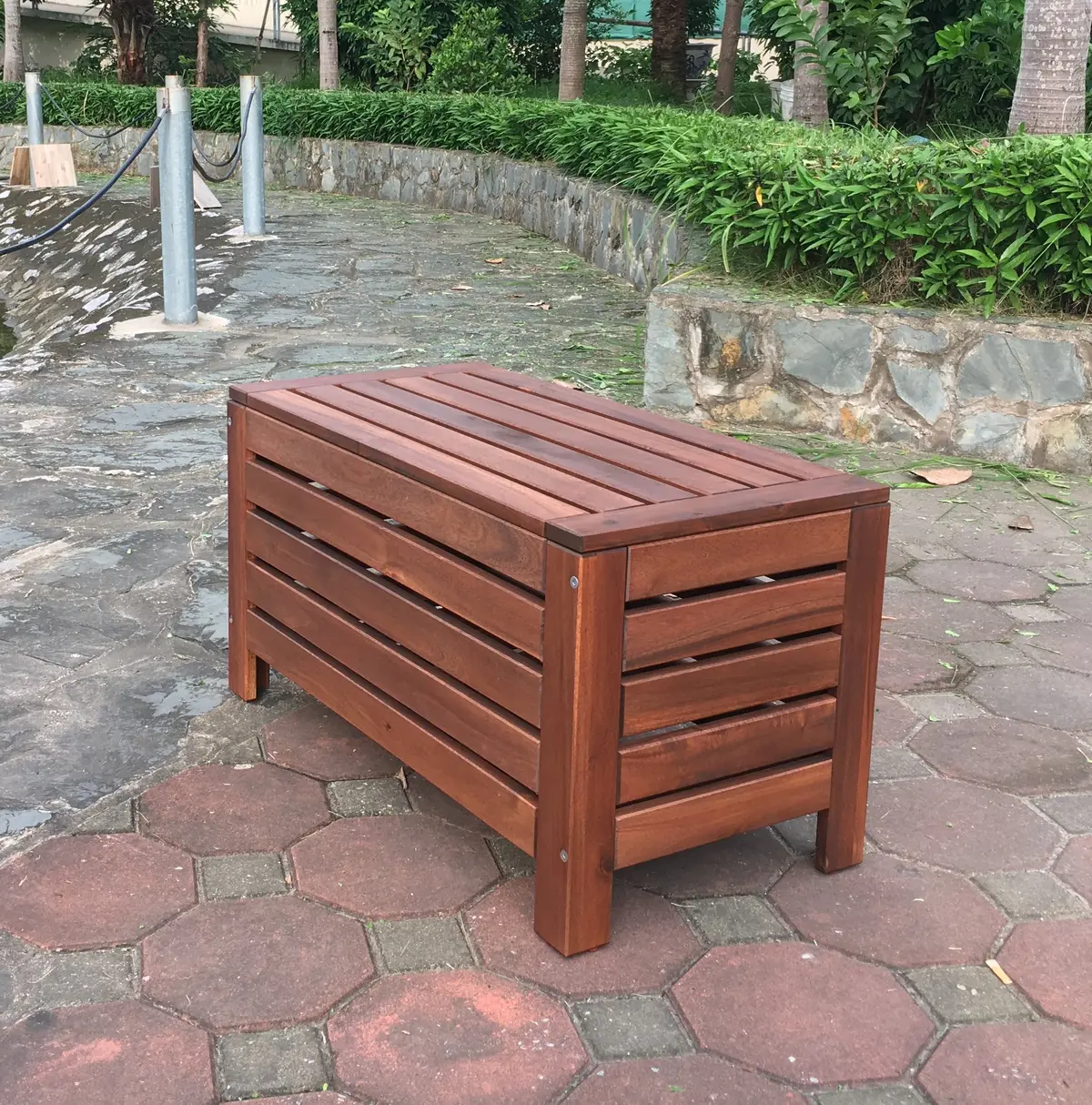
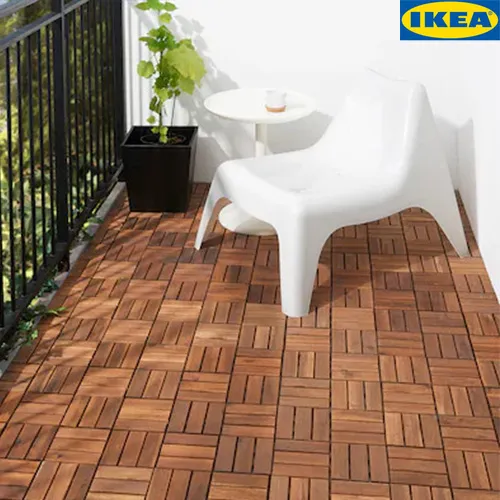
Acacia has rapidly become the most popular hardwood for outdoor furniture in North America.
| Metric | Value |
|---|---|
| Janka Hardness | 1,100 – 1,750 lbf |
| Lifespan (Untreated) | 15–20 years |
| Lifespan (Treated) | 25+ years |
| Relative Cost | $$ (Mid-range) |
Pros:
- Natural oil content provides excellent rot/water resistance
- Long lifespan relative to cost
- FSC certification widely available
- Beautiful varied grain structure
Cons:
- Requires annual oiling for best appearance
- Heavier than softwoods
Best for: Mid-to-high-end retail collections, B2B wholesale programs, FSC-committed brands.
Material #2: Teak Wood — The Premium Standard
Rating: ★★★★☆ (4/5)
Teak is the “Holy Grail” of outdoor hardwood. Its extreme oil and silica content make it virtually impervious to rot.
| Metric | Value |
|---|---|
| Janka Hardness | 1,000 – 1,150 lbf |
| Lifespan (Untreated) | 30–50+ years |
| Lifespan (Treated) | 50+ years |
| Relative Cost | $$$$$ (Ultra-premium) |
Pros:
- Best-in-class longevity
- Minimal maintenance required
- Highest weather resistance
Cons:
- Very expensive (3–5x Acacia)
- Supply chain risks (Myanmar sanctions, limited plantation)
- Heavy weight
Best for: Ultra-luxury market, marine environments, high-end hospitality.
Material #3: Eucalyptus — The Budget Alternative
Rating: ★★★☆☆ (3.5/5)
Eucalyptus is often marketed as a Teak alternative. It is moderately durable and significantly cheaper than Teak.
| Metric | Value |
|---|---|
| Janka Hardness | 800 – 1,100 lbf |
| Lifespan (Treated) | 10–15 years |
| Relative Cost | $ (Low) |
Pros:
- Affordable price point
- Lightweight
- Sustainable (fast-growing)
Cons:
- Less dense and less weather-resistant than Acacia
- Shorter lifespan
- Can warp in extreme climates
Best for: Entry-level price points, seasonal furniture.
Material #4: Cedar — The Lightweight Classic
Rating: ★★★☆☆ (3/5)
Western Red Cedar is prized for its lightweight nature and insect-repelling aroma.
| Metric | Value |
|---|---|
| Janka Hardness | 350 – 580 lbf |
| Lifespan (Treated) | 15–20 years |
| Relative Cost | $$ (Mid-range) |
Pros:
- Lightweight and easy to move
- Naturally insect-repelling
- Pleasant aroma
Cons:
- Very soft (dents and scratches easily)
- Requires regular maintenance
- Not suitable for heavy-use commercial settings
Best for: Casual residential furniture, Adirondack chairs.
Material #5: Pine — The Entry-Level Softwood
Rating: ★★☆☆☆ (2/5)
Pine is the most common wood in the world, but it requires significant chemical treatment to survive outdoors.
| Metric | Value |
|---|---|
| Janka Hardness | 380 – 600 lbf |
| Lifespan (Treated) | 5–10 years |
| Relative Cost | $ (Budget) |
Pros:
- Lowest cost
- Widely available
- Easy to paint
Cons:
- Requires pressure treatment (chemicals)
- Shortest lifespan
- Prone to warping and cracking
Best for: Budget DIY projects, painted furniture.
Comparative Head-to-Head: Acacia vs. All
When you factor in cost, durability, sustainability, and aesthetics, Acacia emerges as the best overall value for 2026. Here is why:
| Acacia | Teak | Eucalyptus | Cedar | Pine | |
|---|---|---|---|---|---|
| Durability | ⭐⭐⭐⭐ | ⭐⭐⭐⭐⭐ | ⭐⭐⭐ | ⭐⭐⭐ | ⭐⭐ |
| Value | ⭐⭐⭐⭐⭐ | ⭐⭐⭐ | ⭐⭐⭐⭐ | ⭐⭐⭐ | ⭐⭐⭐⭐ |
| Sustainability | ⭐⭐⭐⭐⭐ | ⭐⭐⭐ | ⭐⭐⭐⭐ | ⭐⭐⭐⭐ | ⭐⭐⭐ |
| Availability | ⭐⭐⭐⭐⭐ | ⭐⭐ | ⭐⭐⭐⭐ | ⭐⭐⭐ | ⭐⭐⭐⭐⭐ |
Why Material Matters: The Science of Outdoor Durability
When outdoor furniture is exposed to the elements, it faces a complex set of physical and chemical challenges. Understanding these helps explain why some woods thrive and others fail:
- UV Degradation: Sunlight breaks down lignin, the “glue” in wood cells. This causes color fading and surface brittleness.
- Freeze-Thaw Cycles: Water penetrates porous wood, expands as ice, and cracks the fibers from within. Denser woods are far more resistant to this.
- Fungal Decay: Airborne spores colonize wood that retains moisture. Rot begins when MC exceeds 19%.
Comparing Resistance Levels
| Wood | UV Resistance | Rot Resistance | Freeze Resistance |
|---|---|---|---|
| Acacia | Good | Excellent | Very Good |
| Teak | Excellent | Excellent | Good |
| Eucalyptus | Moderate | Good | Moderate |
| Cedar | Moderate | Good | Good |
| Pine (treated) | Poor | Good (chemical) | Moderate |
The Full Breakdown: Regional Climate Suitability
Hot and Humid Climates (Florida, Gulf Coast)
For humid environments, rot resistance is paramount. In a head-to-head test, Teak is the undisputed winner — but FSC-certified Acacia with annual oiling performs excellently and costs 60% less.
Cold and Snowy Climates (Midwest, Northeast)
Freeze-thaw is the biggest threat here. Cedar and Acacia outperform Eucalyptus due to their more stable cell structure. All wood in these climates benefits from winter storage or weatherproof covers.
Dry Desert Climates (Arizona, Nevada)
Paradoxically, very dry climates can cause wood to crack. Acacia handles this better than most due to its high oil content. Pine should be avoided without heavy treatment in these regions.
Acacia vs. Composite and Synthetic Materials
Many importers also compare natural wood with composite and synthetic alternatives. Here’s a realistic comparison:
Acacia vs. HDPE (High-Density Polyethylene)
- HDPE is virtually maintenance-free and impervious to rot.
- Acacia provides a natural aesthetic that HDPE can never replicate.
- For mid-to-high-end retail, natural wood commands a 20-30% premium over synthetic alternatives at retail.
Acacia vs. Powder-Coated Aluminum
- Aluminum is lightweight and never rusts.
- Acacia provides warmth and perceived value that metal cannot achieve.
- In the US market, solid wood furniture converts at a higher rate at comparable price points.
From Forest to Furniture: How NAFOCO Processes Acacia
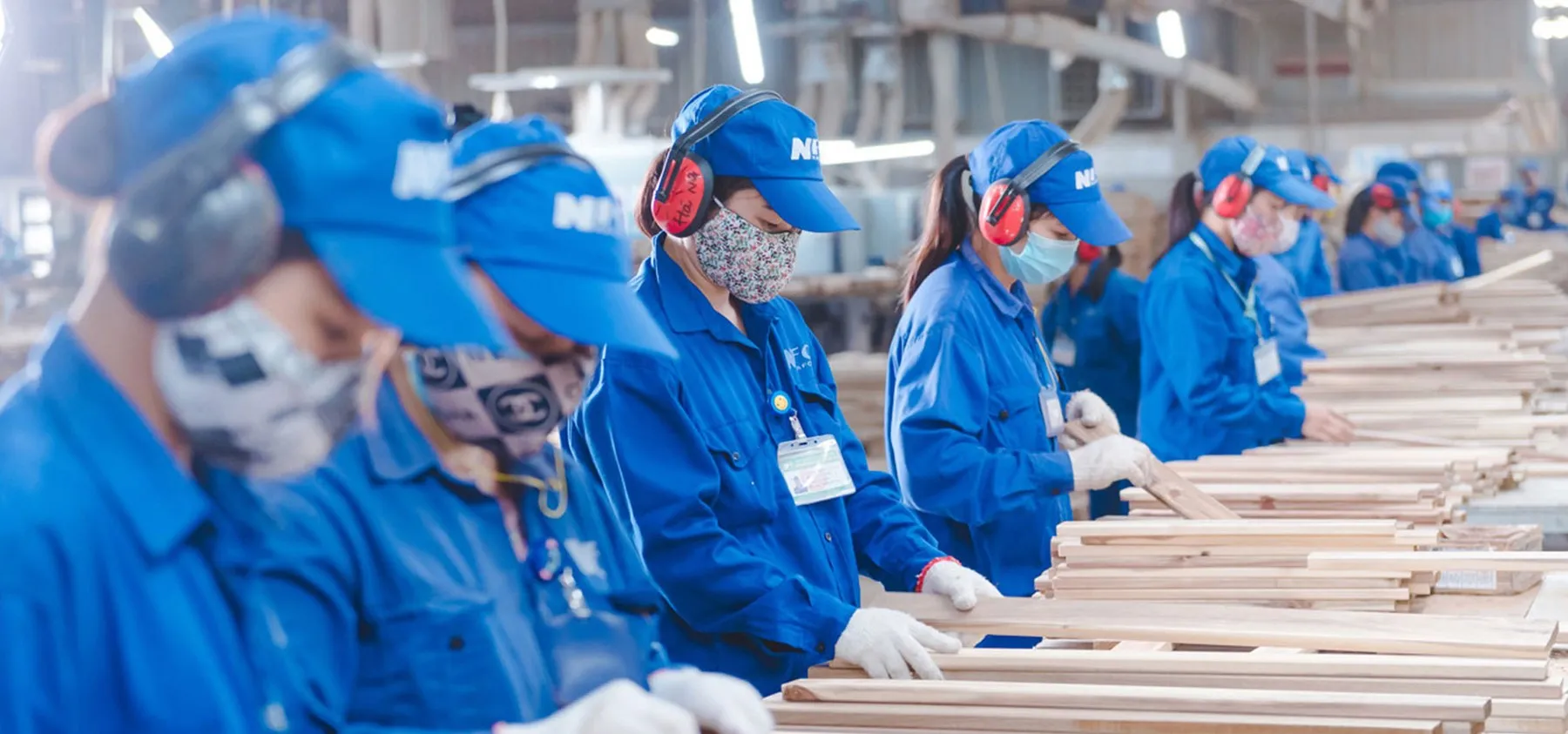
The journey from an acacia tree to a finished outdoor dining set involves multiple critical steps that determine the final quality:
Step 1: Selective Harvesting Trees are harvested on a 7-12 year cycle. Selection criteria include diameter, straightness, and freedom from major knots. This selective approach ensures a consistent grade of raw material.
Step 2: Sawmill Processing Logs are processed using band saws to produce planks and boards of standard dimensions. Waste wood is converted to biomass energy, supporting our zero-waste manufacturing goals.
Step 3: Kiln Drying All lumber is kiln-dried to 8-12% moisture content using our controlled-atmosphere drying kilns. The process takes 21-28 days depending on thickness.
Step 4: Grading and Sorting Dried lumber is graded by color, grain pattern, and freedom from defects. Premium grades are reserved for tabletops and visible surfaces; lower grades are used for structural components where they are not visible.
Step 5: CNC Machining Precision CNC routers cut all components to exact specifications with ±0.5mm tolerances. This is critical for RTA furniture that must be assembled by the end consumer.
Step 6: Finishing Components receive up to four coats of UV-resistant finish. Sanding between coats ensures a smooth, professional surface that rivals any globally-produced furniture.
Frequently Asked Questions on Outdoor Wood Selection
Q: What is the best wood for outdoor furniture in a beach climate? A: Teak is ideal due to its exceptional resistance to salt air corrosion. However, FSC-certified Acacia with a marine-grade sealer is an excellent and far more affordable alternative.
Q: How long does outdoor Acacia furniture last? A: With annual oiling and basic cover protection in winter, well-made Acacia outdoor furniture can last 15-25 years.
Q: Can I leave Acacia outdoor furniture out all year? A: In temperate climates, yes. In climates with harsh winters or extreme heat, we recommend using furniture covers or storing during the off-season.
Q: What finish is best for outdoor Acacia wood? A: A penetrating teak or hardwood oil is ideal. Applied annually, it maintains the wood’s natural oil level and prevents surface graying.
The Science of Timber Durability: Janka and Density Analysis
To appreciate why certain woods dominate the export market, we must look at the technical specifications that define their performance. The Janka Hardness test is the industry standard, measuring the force required to embed an 11.28mm steel ball into the wood.
| Wood Species | Janka Hardness (lbf) | Density (kg/m3) |
|---|---|---|
| Acacia (Vietnamese) | 1,100 - 1,750 | 650 - 850 |
| White Oak | 1,360 | 750 |
| Teak (Plantation) | 1,000 - 1,150 | 600 - 700 |
| Black Walnut | 1,010 | 640 |
For B2B buyers, these numbers translate directly to product longevity. A higher Janka rating means the furniture resists denting and surface wear from heavy daily use. In the hospitality sector (hotels and restaurants), where furniture is subjected to high turnover, the 1,500+ lbf rating of premium Vietnamese Acacia makes it a superior choice to traditional domestic hardwoods.
Kiln Drying: The Invisible Quality Factor
The greatest risk in international furniture shipping is “checking” (small surface cracks) caused by moisture imbalance. When furniture moves from the humid environment of Vietnam to the dry indoor air of the US Midwest or the arid climate of Arizona, the wood fibers shrink.
NAFOCO uses advanced vacuum kiln drying technology to achieve a consistent 8-12% moisture content (MC). This process takes 21-28 days and is monitored by AI-driven sensors. By achieving this precise MC range, we ensure the wood is “stressed-relieved,” meaning it will maintain its dimensions even after thousands of miles of ocean transit.
The Economics of Sourcing: Tariff Mitigation and the China Plus One Strategy
In 2026, sourcing is as much about trade policy as it is about product quality. The “China Plus One” strategy is no longer a luxury—it is a survival requirement for US importers.
Section 301 Tariffs and Antidumping Duties Chinese-origin wood furniture faces a primary tariff of 25% under Section 301, plus potential antidumping duties that can reach 200% for bedroom furniture and cabinets. Vietnamese-origin goods, conversely, benefit from the General Rate of Duty, which is often 0% for many furniture categories under specific trade programs.
The Financial Reality On a $20,000 container of outdoor furniture, the difference in duties alone can be $5,000 to $40,000. By partnering with NAFOCO, importers immediately recapture this margin, which can be used to improve retail competitiveness or invested in brand marketing.
ESG Compliance: More Than Just a Certificate
For modern retail boards, ESG (Environmental, Social, and Governance) reporting is a fiduciary duty. Sourcing from a vertically integrated manufacturer like NAFOCO simplifies this reporting significantly.
Traceability (The Lacey Act and EUDR) The US Lacey Act and the EU Deforestation Regulation (EUDR) require importers to prove the legal origin of their wood. NAFOCO’s 1,200 hectares of FSC-certified forest provide a clear, third-party audited chain of custody. We provide geolocation data for our harvests, allowing our clients to prove to regulators that their products are not linked to deforestation.
Social Responsibility Our BSCI and SEDEX audits provide transparency into our labor practices. We provide fair wages, health insurance, and safe working conditions for 1,800 employees in Ninh Binh. For your brand, this means zero risk of “social scandals” that can devastate a retail reputation overnight.
Logistics Excellence: Maximizing Container Utilization
Ocean freight is a significant part of the landed cost. NAFOCO’s engineering team uses 3D loading software to optimize every cubic centimeter of a 40HQ container.
- RTA (Ready-To-Assemble) Optimization: By designing components that flat-pack efficiently, we can often fit 20-30% more units per container than traditional “knock-down” designs.
- Packaging Integrity: We use 200lb-test double-walled corrugated cardboard with internal corner protectors. This ensures that even in a tightly packed container, the product arrives in pristine retail condition.
- Port Proximity: Our factories are located within 3 hours of Hai Phong port, reducing domestic drayage costs and ensuring we never miss a vessel cutoff.
The Strategic Value of Long-Term Supply Chain Partnerships
In the global furniture industry of 2026, a “transactional” sourcing model—where buyers jump from factory to factory in search of the lowest price—is a recipe for failure. The most successful US and European retailers are those who build deep, strategic partnerships with their manufacturers.
Why Partnership Beats Price-Shopping:
- Priority Capacity Allocation: During the peak Q4 and Q1 shipping seasons, production space in Vietnam is at a premium. Partners who have consistent, year-round volume with NAFOCO receive priority allocation, ensuring their shelves are never empty during the critical Spring selling season.
- Collaborative Product Development: When we work with a buyer over several seasons, our engineering team gains a deep understanding of their brand’s aesthetic and functional requirements. This speeds up the sampling process and reduces the time-to-market for new collections.
- Joint Risk Mitigation: When raw material prices fluctuate or shipping disruptions occur, we work with our strategic partners to share the burden and find solutions. This stability is invaluable for retail financial planning.
- Shared ESG Goals: Carbon reduction and social compliance are long-term journeys. By working together over multiple years, we can align our sustainability investments with your brand’s specific ESG targets.
Technical Performance and Weatherability Testing
Our quality control lab performs rigorous testing to simulate years of outdoor exposure in just weeks.
- Salt Spray Testing: Essential for furniture destined for coastal regions like Florida, California, or the Mediterranean. We ensure that our stainless steel hardware and protective finishes can withstand corrosive salt air without failure.
- Static Load Testing: We test all chair and sofa designs to 300+ lbs of static load to ensure structural safety and compliance with US and EU furniture standards (BIFMA/EN).
- Adhesion Testing: We perform “cross-hatch” adhesion tests on our lacquered finishes to ensure they won’t peel or flake even under extreme temperature fluctuations.
- Cycle Testing: For folding furniture and adjustable loungers, we perform thousands of opening/closing cycles to ensure the mechanisms remain smooth and reliable for the end consumer.
The Role of Design in Outdoor Living Trends
Outdoor furniture is no longer just “utilitarian.” It has become a fashion-forward category driven by interior design trends. At NAFOCO, we stay ahead of these trends by collaborating with international designers:
- The “Organic Modern” Trend: Combining the raw, golden tones of Acacia with sleek, minimalist frames.
- The “Curated Patio” Trend: Moving away from matching 5-piece sets toward “mix-and-match” aesthetics that feel like a curated indoor room.
- The “Compact Living” Trend: Designing high-quality solid wood furniture for smaller urban balconies and compact patios, where space optimization is the key selling point.
Final Thoughts on Your 2027 Procurement Strategy
As you plan your procurement for the upcoming season, remember that the most successful products are those that solve a problem for the consumer. Whether that problem is a need for sustainable materials, a desire for luxury aesthetics at an affordable price, or a requirement for durable furniture that survives the winter, Acacia wood from NAFOCO is the answer.
We invite you to join our growing network of global partners and experience the “NAFOCO Difference” in wood manufacturing excellence.
Making Your Final Decision: A Summary of Selection Criteria
Selecting the right outdoor wood material is a decision that affects your brand’s reputation, your customer’s satisfaction, and your bottom line. For the vast majority of B2B importers targeting the mid-to-premium market segment, FSC-certified Acacia is the optimal choice according to independent testing labs and retail performance indicators across the US and European markets. We invite you to test our products against any competitor.
Conclusion: The Smart Choice for US Importers
If you are sourcing outdoor furniture for a US retail program, the data is clear: Acacia is the smartest choice for the majority of consumers. It provides the premium look and feel that customers demand, at a price point that allows for healthy retail margins.
For ultimate performance and sustainability, choose FSC-certified Acacia from a proven manufacturer like NAFOCO. With over 35 years of experience and the capacity to ship thousands of containers annually, we offer the ideal blend of quality and scale.
Ready to Build Your 2027 Outdoor Collection? Download our Outdoor Furniture Catalog or Get in touch with our sales team.
Ready to De-Risk Your Supply Chain?
NAFOCO has been a trusted manufacturing partner for global furniture brands since 1991. Let us show you how easy the transition can be.