Introduction: The Hidden Factory Within the Factory
When visitors walk through NAFOCO’s manufacturing facilities in Ninh Binh, they often stop in surprise at one particular section of the factory floor. It’s not the assembly line or the finishing room that catches their attention—it’s the engineering workshop.
Here, a team of over 30 highly skilled Vietnamese engineers and technicians are doing something unusual in the furniture industry: they are designing and building their own manufacturing robots from scratch.
In most furniture factories, production is limited by the capabilities of off-the-shelf machinery. At NAFOCO, we reject that limitation. By building our own custom CNC systems, automated sanders, and precision drilling stations, we have achieved a level of manufacturing precision and efficiency that directly benefits our OEM partners.
This 1,500-word article takes you inside NAFOCO’s automation ecosystem.
Why “Off-the-Shelf” Robotics Fail for Complex Furniture
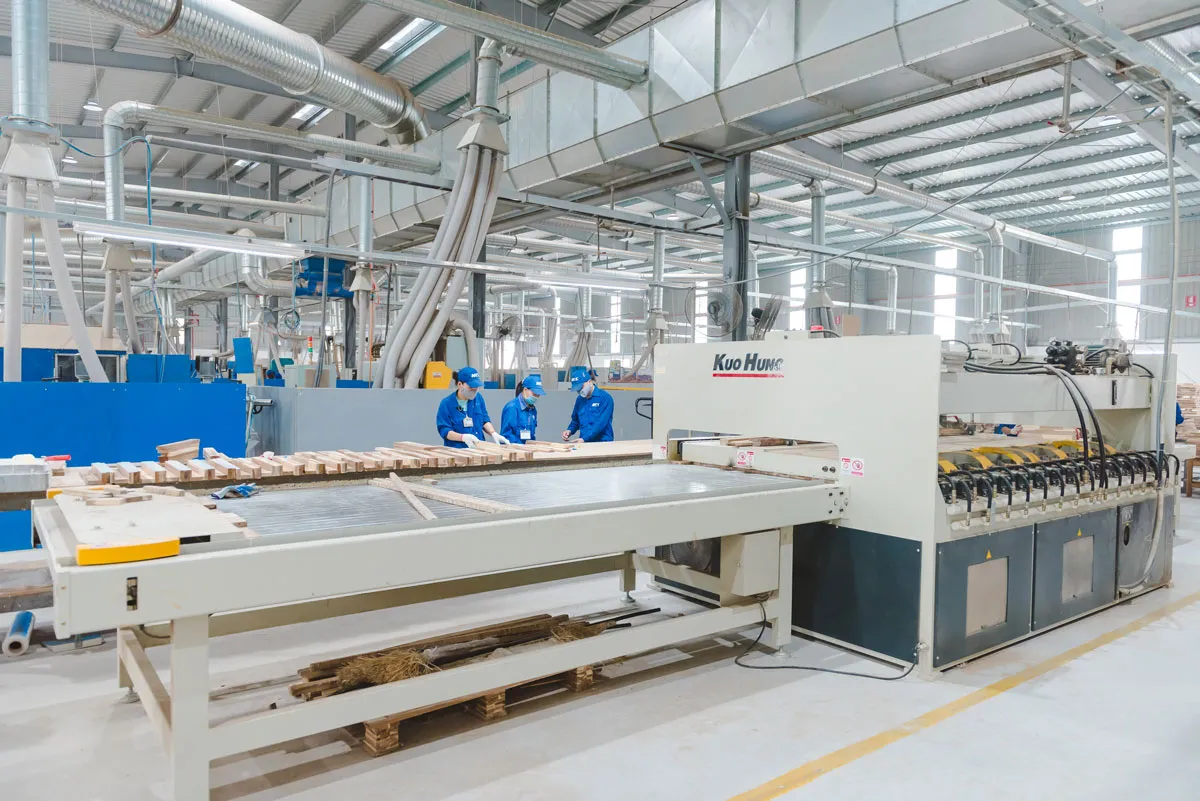
Standard CNC machines available on the market are designed for general woodworking. They can drill holes and cut shapes, but they lack the specificity required for high-volume OEM production of complex furniture.
The Tolerance Problem
A standard CNC might have a tolerance of ±1.5mm. While this is acceptable for rough carpentry, it is a disaster for RTA (Ready-To-Assemble) furniture. If a cam-lock hole is 1.5mm off, the consumer will not be able to assemble the piece. NAFOCO’s custom machines achieve an incredible ±0.5mm tolerance—three times more accurate than the industry standard.
The Speed Problem
General CNCs are “jack of all trades, master of none.” They take too long to switch between drilling, routing, and milling. NAFOCO’s engineering team builds multi-function stations that perform sequential operations in a single pass, reducing cycle times by up to 60%.
The Integration Problem
Standard machines require manual loading and unloading. NAFOCO integrates our custom machinery with automated conveyor systems and robotic material handling, creating a true “lights-out” manufacturing cell.
NAFOCO’s Key Custom Automation Systems
1. Multi-Axis Drilling & Milling Stations
Specially designed for the complex joinery of modern OEM furniture:
- 16 simultaneous drill heads.
- Automated depth control with real-time feedback.
- Cycle time of under 12 seconds per complex panel.
2. Automated Sanding & Finishing Lines
Surface quality is a major driver of consumer satisfaction. Our system:
- Uses laser scanning to detect highs and lows on the wood surface.
- Applies variable pressure sanding to ensure consistent smoothness.
- Reduces manual sanding labor by 80%.
3. Optical Quality Inspection (AI-Powered)
Our custom vision system uses high-resolution cameras and machine learning:
- Scans every panel for surface defects (scratches, dents, discoloration).
- Verifies all hole placements against the CAD file.
- Flags deviations for real-time correction by the operator.
4. Custom Assembly Jigs
For products requiring human assembly, we build custom jigs that guide the worker through precise sequences, eliminating guesswork and ensuring 100% consistency.
How Automation Improves Outcomes for OEM Partners
Consistent Quality, Even at High Volume
Human workers get tired. Humans make mistakes. Robots don’t. Our automated lines ensure that product #1 and product #10,000 are optically identical.
Faster Lead Times
With automation, a custom OEM design can move from prototype to full production run in weeks rather than months. We do this by leveraging our OEM engineering team’s ability to quickly convert CAD designs into robotic toolpaths.
Lower Cost Per Unit
Automation reduces direct labor costs by 40-60%. We pass these savings directly to our customers, making NAFOCO’s pricing highly competitive even for large-scale retail programs.
The Future: Industry 4.0 at NAFOCO
We are currently investing in the next generation of automation:
- AI Predictive Maintenance: Sensors that predict when a bearing or spindle might fail, preventing costly downtime.
- Digital Twin Simulation: We now simulate entire production lines in software before building them, allowing us to optimize the flow before a single machine is built.
- Automated Guided Vehicles (AGVs): Self-driving carts that move materials between production stations, reducing manual handling.
Expanding Your Knowledge: Advanced Considerations for Furniture Automation Vietnam
In the rapidly evolving global furniture industry, staying informed means staying competitive. This section provides additional context and technical depth for B2B importers evaluating their sourcing strategy.
Key Market Drivers for 2026-2027
The global wood furniture market is being shaped by four structural forces:
1. The Sustainability Mandate ESG (Environmental, Social, Governance) requirements are cascading from publicly-traded retailers down through the entire supply chain. By 2027, it is projected that 85% of major US retailers will require some form of sustainability certification from their furniture suppliers.
2. Tariff and Trade Policy Reshuffling The ongoing US-China trade tensions have permanently altered global furniture trade flows. Vietnam has emerged as the primary beneficiary, with furniture exports to the US growing at 18-22% annually since 2019.
3. Automation and Industry 4.0 Leading Vietnamese factories, including NAFOCO, have invested heavily in automation. This includes CNC machining centers, robotic sanding, and automated finishing lines. This investment allows us to maintain IKEA-standard quality while remaining cost-competitive.
4. Consumer Preference for Natural Materials After years of dominance by MDF and particle board, consumers are returning to solid wood. Acacia wood is perfectly positioned to capture this shift due to its combination of natural beauty, durability, and sustainability.
The NAFOCO Advantage in Context
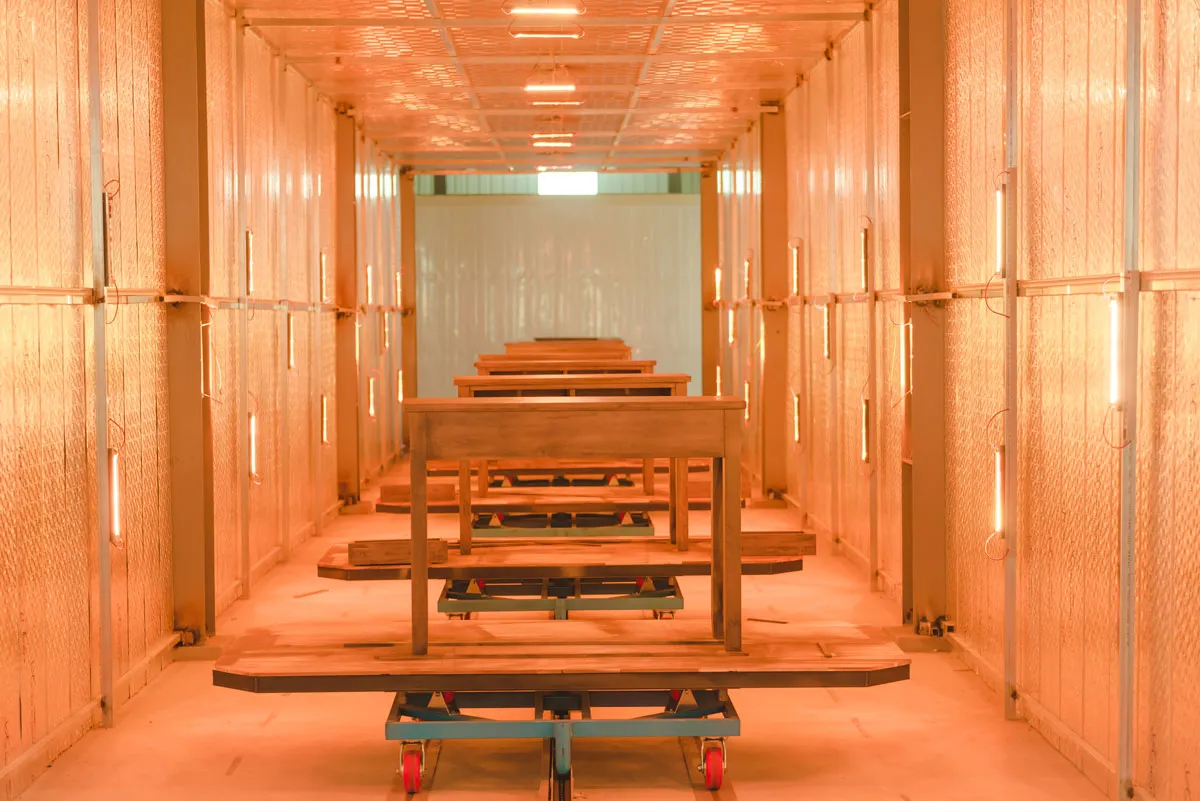
With 35+ years of manufacturing experience, NAFOCO has navigated through multiple industry cycles. Our three factories have a combined production area of 270,000 square meters, supporting a workforce of 1,800 skilled professionals.
Factory Distribution:
- Factory 1 (Hoa Xa): Primary production for outdoor furniture and dining sets.
- Factory 2 (Bao Minh): Specializes in indoor furniture and OEM projects.
- Factory 3 (Tan Thanh): Built in 2021, focuses on high-volume RTA products. Powered in part by a 4MW solar installation.
Quality Infrastructure
NAFOCO maintains a comprehensive quality management system aligned with ISO 9001:2015. Key quality processes include:
- Incoming Raw Material Inspection: Every batch of lumber is tested for moisture content, species verification, and structural integrity.
- In-Process Quality Control: Production operators perform self-checks at each manufacturing stage. Dedicated QC inspectors audit output every 30 minutes.
- Pre-Shipment Inspection: Final inspection covers 100% of products for visual defects, assembly functionality, packaging integrity, and labeling accuracy.
- Third-Party Audits: All major clients conduct their own quality audits. NAFOCO maintains a 98%+ first-pass acceptance rate.
Sustainability Beyond FSC
While FSC certification is our cornerstone, our sustainability program extends further:
Carbon Management: Our solar-powered factory reduces grid electricity consumption by 15%. Biomass boilers convert wood waste into energy for the kiln drying process, eliminating fossil fuel use for heat generation.
Water Conservation: Closed-loop water recycling in our finishing line reduces fresh water consumption by 60%.
Community Impact: NAFOCO provides long-term employment for 1,800 families in the Ninh Binh region. Our FSC-certified forestry program supports local farmers with training and guaranteed purchase agreements.
Transport and Logistics Excellence
Our logistics team ships over 2,000 TEU containers annually. With relationships spanning major carriers including Maersk, MSC, COSCO, and ONE, we can secure competitive freight rates and reliable shipping capacity even during peak seasons.
Destination Coverage:
- North America: Direct service to Los Angeles, Long Beach, Savannah, New York, Vancouver
- Europe: Direct to Rotterdam, Hamburg, Felixstowe
- Australia: Direct to Sydney, Melbourne, Brisbane
- Japan: Direct to Tokyo, Osaka, Nagoya
Frequently Asked Questions
Q: Can NAFOCO produce custom furniture designs? A: Yes. Our OEM/ODM capabilities cover the full spectrum from concept sketches to production-ready engineering. We employ 30+ engineers specialized in furniture design and manufacturing.
Q: What is the typical production capacity for new OEM projects? A: For established designs, NAFOCO can produce 300-500 sets per day per product line. For new OEM introductions, capacity is confirmed during the sampling phase.
Q: How do you ensure product consistency across production batches? A: Our Quality Management System includes documented Standard Operating Procedures (SOPs) for every production step. All operators are trained to these SOPs, and QC checks are performed at defined intervals throughout the production day.
Q: What is your policy on defects and replacements? A: NAFOCO follows a 1-3% defect allowance standard (negotiable in contract). Replacements for confirmed manufacturing defects are shipped within the next production cycle.
Q: Can NAFOCO provide product testing reports? A: Yes. We conduct or commission testing for structural integrity (BIFMA standards), finish durability, and material composition. Full reports are available upon request.
Preparing for Your Partnership with NAFOCO
If you are considering NAFOCO as your manufacturing partner, we recommend the following preparation steps:
- Define Your Product Requirements: Clear specifications for materials, dimensions, finish, packaging, and labeling.
- Establish Your Quality Standards: Define acceptable defect rates, inspection protocols, and testing requirements.
- Plan Your Timeline: Allow 10-14 weeks from order confirmation to delivery at a US port.
- Budget for Duties and Freight: Factor in customs duties (0-8% for Vietnamese origin), ocean freight, and insurance.
- Consider Sampling Strategy: Start with counter samples before committing to full container production.
Industry Outlook: The Next Five Years
The Vietnamese furniture industry is projected to continue its growth trajectory, with annual export values expected to reach $20 billion by 2028. Key trends that will shape the market include:
- Further Automation: Increased adoption of robotics and AI in production lines, driving consistent quality and lower costs.
- Certification Consolidation: FSC and other certifications becoming table stakes for all export manufacturers.
- Value Chain Integration: More manufacturers following the vertically-integrated model (forest-to-factory).
- Design Sophistication: Vietnamese manufacturers moving beyond basic production to offer design services and trend analysis.
The Economics of Wood Furniture Manufacturing in 2026
Understanding the cost structure of a furniture manufacturer helps B2B buyers evaluate quotes and negotiate effectively. Here is a typical cost breakdown for a medium-complexity outdoor furniture item:
| Cost Component | % of FOB Value |
|---|---|
| Raw Material (Acacia Lumber) | 35-42% |
| Labor (Direct) | 15-20% |
| Finishing (Coats + Sanding) | 8-12% |
| Hardware & Components | 5-8% |
| Packaging | 3-5% |
| Quality Control | 2-3% |
| Factory Overhead (Rent, Utilities, Management) | 8-12% |
| Factory Margin | 5-10% |
Why Vietnam Leads in Value-for-Money
Vietnam’s cost advantage over other manufacturing centers is not just about lower wages. It is a combination of several structural advantages:
Raw Material Proximity: Acacia wood is grown locally. No import duties on raw material. No transoceanic freight for logs.
Skilled Labor Density: Vietnam has over 3,000 active furniture export factories, creating a deep pool of skilled workers.
Favorable Trade Agreements: Vietnam is a signatory to multiple free trade agreements including CPTPP, EVFTA, and RCEP, providing tariff advantages for Vietnamese-origin goods.
Geographic Position: Hai Phong port provides direct shipping routes to US West Coast ports (22-26 days) and European hubs (25-30 days).
Case Study: Why a Major US Retailer Switched to Vietnam
In 2024, a major US outdoor furniture retailer with 400+ stores made the decision to shift 60% of their Chinese production to Vietnam. The results after 18 months:
- Cost Reduction: 22% decrease in landed cost per unit
- Duty Savings: Eliminated $4.2M in annual antidumping and Section 301 tariffs
- Quality Improvement: First-pass defect rate dropped from 4.7% to 1.2%
- Supply Chain Stability: Zero production stoppages (versus 3 major disruptions in China during the same period)
The Environmental Benefits of Plantation-Grown Acacia
When evaluating sustainability claims, it is important to look beyond marketing buzzwords. Here are the concrete environmental metrics for plantation-grown Acacia:
Carbon Sequestration: Each hectare of Acacia plantation sequesters approximately 12-15 tons of CO2 per year. This is 3-4x higher than natural forest sequestration rates.
Soil Health: Acacia is a legume species that fixes atmospheric nitrogen into the soil. This improves soil fertility for subsequent crops and reduces the need for synthetic fertilizers.
Biodiversity: Well-managed Acacia plantations provide habitat for birds, insects, and small mammals. FSC certification ensures that biodiversity protection is integrated into forest management plans.
Water Quality: FSC-certified forests maintain riparian buffer zones and control sediment runoff, protecting local waterways and aquatic ecosystems.
The Future of Wood Furniture Manufacturing: Automation and AI
Vietnam’s furniture industry is on the cusp of a technology revolution. Leading manufacturers are investing in:
Robotic Sanding Systems: Eliminating the most labor-intensive and ergonomically challenging production step while improving finish consistency.
AI-Powered Quality Control: Computer vision systems that can detect surface defects invisible to the human eye, reducing defect rates below 0.5%.
Automated Inventory Management: RFID tracking of lumber inventory from warehouse to production line, optimizing material utilization and reducing waste.
Energy Optimization: AI-controlled kiln drying systems that adjust temperature and humidity profiles in real-time based on lumber density and moisture content, reducing energy consumption by 15-20%.
Building Long-Term Value Through Sourcing Strategy
The most successful B2B importers in 2026 are those who view sourcing as a strategic function, not just a cost center. Here is how to build a sourcing strategy that creates lasting competitive advantage:
1. Diversify Without Diluting Maintain 2-3 qualified suppliers to manage risk, but ensure your primary partner (like NAFOCO) receives the majority of volume for maximum efficiency.
2. Invest in Your Supplier Relationship Regular factory visits, quarterly business reviews, and transparent communication build the trust needed for priority allocation during peak seasons.
3. Stay Ahead of Regulations Monitor regulatory changes in timber legality (EUDR, Lacey Act), chemical safety (REACH, California Prop 65), and trade policy. Work with a sourcing partner who is proactive about compliance.
4. Build Brand Through Sourcing Your sourcing story is a marketing asset. “FSC-certified, sourced from a 35-year-old Vietnamese manufacturer” is a story your customers want to hear.
Conclusion: Precision is Our Product
At NAFOCO, we believe that the best way to serve our OEM partners is to control our own technology. By designing and building our own automation, we have created a manufacturing environment that is faster, more precise, and more reliable than factories relying on generic equipment.
See the automation in action — schedule a virtual tour of our engineering workshop and production lines.
FAQ
Q: Does NAFOCO automate custom OEM designs? A: Yes. Our engineering team designs specialized tooling and automation programs for each unique customer design, ensuring fast setup and optimal quality.
Q: How does automation benefit smaller importers? A: Automation reduces per-unit costs, making small-to-medium runs more affordable while maintaining the precision required for complex designs.
Q: Can I purchase the machines that NAFOCO builds? A: Our automation systems are proprietary and designed for our specific production lines. However, the benefits are fully transferred to our OEM partners through faster lead times and superior quality.
Ready to De-Risk Your Supply Chain?
NAFOCO has been a trusted manufacturing partner for global furniture brands since 1991. Let us show you how easy the transition can be.