Introduction: The Tectonic Shift in Global Sourcing
For the past thirty years, the global furniture industry followed a simple logic: if you wanted scale and low cost, you went to China. However, between 2018 and 2026, the world’s supply chain map has been fundamentally redrawn. Today, for US furniture retailers, e-commerce brands, and wholesalers, the question is no longer “Why Vietnam?” but “How quickly can we move?”
The “China-Plus-One” strategy has evolved into a full-scale diversification effort. Vietnam has emerged as the clear winner of this shift, not merely as a “low-cost alternative,” but as a highly sophisticated, technologically advanced, and ESG-compliant manufacturing powerhouse.
NAFOCO has been at the center of this transition since our founding in 1991. With 35 years of experience and a 17-year history as a trusted IKEA partner, we have seen firsthand why the world’s largest brands are shifting their OEM programs to Vietnam. This 2,500-word guide provides a cold, data-driven comparison of sourcing from Vietnam vs. China in 2026.
Section 1: The Trade Policy & Tariff War
The most immediate and painful driver for the shift away from China is the US trade policy.
1. Section 301 Tariffs
Since 2018, the US government has maintained a 25% tariff on most wood furniture imported from China under Section 301. Despite changes in administration, these tariffs have remained a permanent fixture of the trade landscape.
- China OEM: A ,000 container of dining tables immediately becomes a ,000 container at the US port of entry.
- Vietnam OEM: Most wood furniture categories enjoy 0% or significantly lower tariffs under Most Favored Nation (MFN) status.
2. Anti-Dumping (AD) and Countervailing Duties (CVD)
The US Department of Commerce has launched multiple AD/CVD investigations into Chinese wooden bedroom furniture, vanities, and cabinets. These duties can often exceed 100%, effectively shutting Chinese manufacturers out of those specific US market segments overnight. Vietnam remains a stable haven, providing the predictability that CFOs and supply chain managers crave.
Section 2: Material Supply Chain and FSC Integrity
A factory is only as reliable as its access to raw materials. This is where the geographic and environmental advantages of Vietnam become clear.
The Problem with Chinese Material Sourcing
China is a net importer of timber. Much of its wood supply comes from Russia, Africa, or other parts of Southeast Asia. In the era of the Lacey Act and the EUDR (EU Deforestation Regulation), proving the “clean” origin of timber through multiple international borders is a legal nightmare.
The Vietnam Acacia Advantage
Vietnam has spent 20 years building a massive domestic plantation industry.
- Local Control: At NAFOCO, we utilize locally grown Acacia mangium. We manage 1.2 million square meters of FSC-certified plantation area.
- Traceability: Because the forest is only miles away from our three factories, we can provide a 100% transparent “Chain of Custody” from the stump to the shipping box.
- Stability: We are not subject to the price shocks of international timber shipping or the geopolitical risks of importing wood from sanctioned regions.
Section 3: Labor Dynamics and the “Demographic Dividend”
The “cheap labor” argument is outdated, but the “skilled and available labor” argument is stronger than ever.
China’s Aging Workforce
China’s manufacturing sector is facing a severe demographic crisis. The average age of a factory worker in China’s coastal provinces is now over 40. Young Chinese workers are increasingly disinterested in manufacturing, leading to labor shortages and double-digit annual wage inflation.
Vietnam’s Youth and Expertise
Vietnam possesses one of the youngest and most motivated workforces in Asia.
- Motivation: Vietnamese workers view the furniture industry as a path to a stable, middle-class life.
- Skill Level: Decades of vocational training in the wood sector have created a massive pool of skilled carvers, machine operators, and QC technicians.
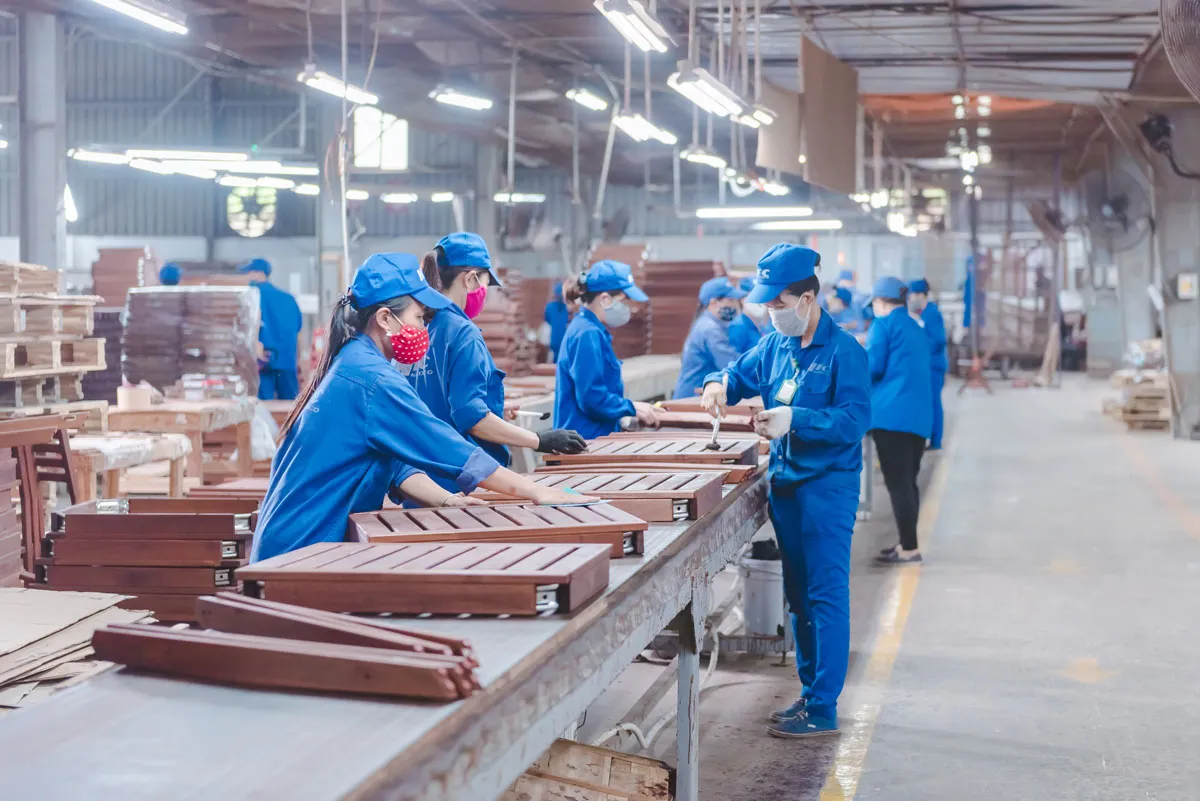
- NAFOCO’s Stability: We employ over 1,800 people in Ninh Binh. Our low turnover rate means that the artisans working on your custom OEM designs today will likely still be there for your re-orders in three years.
Section 4: Manufacturing Sophistication (Industry 4.0)
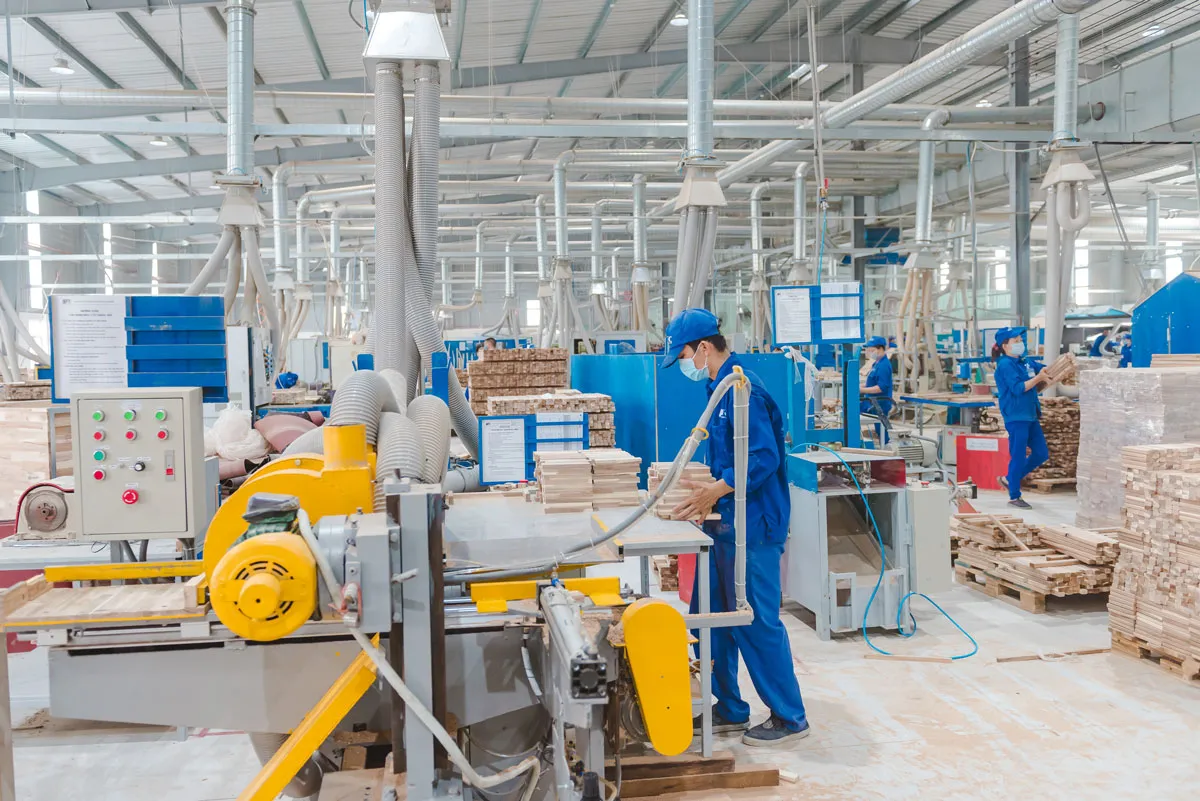
A common myth is that Vietnam is only for “simple” items and China is for “complex” ones. At NAFOCO, our in-house automation team has shattered this myth.
The Automation Leap
While some Chinese factories are highly automated, NAFOCO has leaped directly into custom robotics.
- ±0.5mm Precision: Our engineers design and build custom CNC drilling and milling robots that achieve tolerances required for even the most complex RTA (Ready-To-Assemble) designs.
- Consistency: Automation ensures that the 10,000th unit is identical to the 1st. This level of consistency was once China’s trump card; today, it is a standard feature of NAFOCO’s production.
Section 5: Logistics and Port Efficiency
US importers often worry about the “extra” shipping time from Southeast Asia. Let’s look at the numbers.
- Transit Time (West Coast): 24-26 days. This is identical to the transit time from many of China’s secondary ports.
- C-TPAT Certification: NAFOCO is C-TPAT certified, meaning our containers are flagged as “low risk” by US Customs, leading to faster clearance and fewer costly exams at ports like Los Angeles and Long Beach.
- Container Density: Our expertise in RTA engineering allows us to fit significantly more units per container, often neutralizing any small differences in ocean freight rates between Vietnam and China.
Summary: The Comparative Scorecard
| Feature | China Sourcing (2026) | Vietnam Sourcing (NAFOCO) |
|---|---|---|
| US Import Tariffs | 25% (Section 301) | 0% (Most wood categories) |
| Material Supply | Global Imports (High Risk) | Local FSC Plantation (Low Risk) |
| Labor Trend | Aging / Scarce / Expensive | Young / Skilled / Reliable |
| Sustainability | Complex Traceability | Full Chain of Custody (CoC) |
| Trade Relations | Volatile | Strong and Expanding |
Expanding Your Knowledge: Advanced Considerations for Vietnam Vs China Furniture Oem
In the rapidly evolving global furniture industry, staying informed means staying competitive. This section provides additional context and technical depth for B2B importers evaluating their sourcing strategy.
Key Market Drivers for 2026-2027
The global wood furniture market is being shaped by four structural forces:
1. The Sustainability Mandate ESG (Environmental, Social, Governance) requirements are cascading from publicly-traded retailers down through the entire supply chain. By 2027, it is projected that 85% of major US retailers will require some form of sustainability certification from their furniture suppliers.
2. Tariff and Trade Policy Reshuffling The ongoing US-China trade tensions have permanently altered global furniture trade flows. Vietnam has emerged as the primary beneficiary, with furniture exports to the US growing at 18-22% annually since 2019.
3. Automation and Industry 4.0 Leading Vietnamese factories, including NAFOCO, have invested heavily in automation. This includes CNC machining centers, robotic sanding, and automated finishing lines. This investment allows us to maintain IKEA-standard quality while remaining cost-competitive.
4. Consumer Preference for Natural Materials After years of dominance by MDF and particle board, consumers are returning to solid wood. Acacia wood is perfectly positioned to capture this shift due to its combination of natural beauty, durability, and sustainability.
The NAFOCO Advantage in Context
With 35+ years of manufacturing experience, NAFOCO has navigated through multiple industry cycles. Our three factories have a combined production area of 270,000 square meters, supporting a workforce of 1,800 skilled professionals.
Factory Distribution:
- Factory 1 (Hoa Xa): Primary production for outdoor furniture and dining sets.
- Factory 2 (Bao Minh): Specializes in indoor furniture and OEM projects.
- Factory 3 (Tan Thanh): Built in 2021, focuses on high-volume RTA products. Powered in part by a 4MW solar installation.
Quality Infrastructure
NAFOCO maintains a comprehensive quality management system aligned with ISO 9001:2015. Key quality processes include:
- Incoming Raw Material Inspection: Every batch of lumber is tested for moisture content, species verification, and structural integrity.
- In-Process Quality Control: Production operators perform self-checks at each manufacturing stage. Dedicated QC inspectors audit output every 30 minutes.
- Pre-Shipment Inspection: Final inspection covers 100% of products for visual defects, assembly functionality, packaging integrity, and labeling accuracy.
- Third-Party Audits: All major clients conduct their own quality audits. NAFOCO maintains a 98%+ first-pass acceptance rate.
Sustainability Beyond FSC
While FSC certification is our cornerstone, our sustainability program extends further:
Carbon Management: Our solar-powered factory reduces grid electricity consumption by 15%. Biomass boilers convert wood waste into energy for the kiln drying process, eliminating fossil fuel use for heat generation.
Water Conservation: Closed-loop water recycling in our finishing line reduces fresh water consumption by 60%.
Community Impact: NAFOCO provides long-term employment for 1,800 families in the Ninh Binh region. Our FSC-certified forestry program supports local farmers with training and guaranteed purchase agreements.
Transport and Logistics Excellence
Our logistics team ships over 2,000 TEU containers annually. With relationships spanning major carriers including Maersk, MSC, COSCO, and ONE, we can secure competitive freight rates and reliable shipping capacity even during peak seasons.
Destination Coverage:
- North America: Direct service to Los Angeles, Long Beach, Savannah, New York, Vancouver
- Europe: Direct to Rotterdam, Hamburg, Felixstowe
- Australia: Direct to Sydney, Melbourne, Brisbane
- Japan: Direct to Tokyo, Osaka, Nagoya
Frequently Asked Questions
Q: Can NAFOCO produce custom furniture designs? A: Yes. Our OEM/ODM capabilities cover the full spectrum from concept sketches to production-ready engineering. We employ 30+ engineers specialized in furniture design and manufacturing.
Q: What is the typical production capacity for new OEM projects? A: For established designs, NAFOCO can produce 300-500 sets per day per product line. For new OEM introductions, capacity is confirmed during the sampling phase.
Q: How do you ensure product consistency across production batches? A: Our Quality Management System includes documented Standard Operating Procedures (SOPs) for every production step. All operators are trained to these SOPs, and QC checks are performed at defined intervals throughout the production day.
Q: What is your policy on defects and replacements? A: NAFOCO follows a 1-3% defect allowance standard (negotiable in contract). Replacements for confirmed manufacturing defects are shipped within the next production cycle.
Q: Can NAFOCO provide product testing reports? A: Yes. We conduct or commission testing for structural integrity (BIFMA standards), finish durability, and material composition. Full reports are available upon request.
Preparing for Your Partnership with NAFOCO
If you are considering NAFOCO as your manufacturing partner, we recommend the following preparation steps:
- Define Your Product Requirements: Clear specifications for materials, dimensions, finish, packaging, and labeling.
- Establish Your Quality Standards: Define acceptable defect rates, inspection protocols, and testing requirements.
- Plan Your Timeline: Allow 10-14 weeks from order confirmation to delivery at a US port.
- Budget for Duties and Freight: Factor in customs duties (0-8% for Vietnamese origin), ocean freight, and insurance.
- Consider Sampling Strategy: Start with counter samples before committing to full container production.
Industry Outlook: The Next Five Years
The Vietnamese furniture industry is projected to continue its growth trajectory, with annual export values expected to reach $20 billion by 2028. Key trends that will shape the market include:
- Further Automation: Increased adoption of robotics and AI in production lines, driving consistent quality and lower costs.
- Certification Consolidation: FSC and other certifications becoming table stakes for all export manufacturers.
- Value Chain Integration: More manufacturers following the vertically-integrated model (forest-to-factory).
- Design Sophistication: Vietnamese manufacturers moving beyond basic production to offer design services and trend analysis.
Conclusion: Future-Proofing Your Supply Chain
Choosing a manufacturing partner is not just about the next quarter; it’s about the next decade. Sourcing from China in 2026 carries significant tariff, material, and geopolitical risks. Sourcing from NAFOCO Vietnam offers security, sustainability, and superior landed costs.
The “Great Shift” to Vietnam is permanent. Brands that build deep, automated, and FSC-certified partnerships in Vietnam today will be the market leaders of tomorrow.
Request a custom Vietnam vs. China Cost Comparison — let our strategy team analyze your BOM (Bill of Materials) and show you the exact savings of moving your program to NAFOCO.
FAQ
Q: Is Vietnam’s quality really as good as China’s? A: For top-tier manufacturers like NAFOCO, the quality is often superior. Our IKEA-honed systems and in-house automation ensure a level of precision that matches the world’s highest standards.
Q: How do I handle the transition from a Chinese to a Vietnamese factory? A: NAFOCO’s OEM engineering team specializes in “Design Migration”—taking your existing Chinese production drawings and optimizing them for our automated lines in Vietnam.
Q: Does NAFOCO have the capacity to replace a large Chinese supplier? A: Yes. With 270,000 sqm of factory space and 2,000+ container annual capacity, we are built for large-scale retail programs.
Schedule a virtual factory tour to see our operations firsthand.
Ready to De-Risk Your Supply Chain?
NAFOCO has been a trusted manufacturing partner for global furniture brands since 1991. Let us show you how easy the transition can be.